







What's Happening?
Hensel Phelps, a national construction organization that originated in northern Colorado in 1937, has broken ground on its new corporate headquarters in Loveland, Colorado. The company has outgrown its previous campus, necessitating the development of
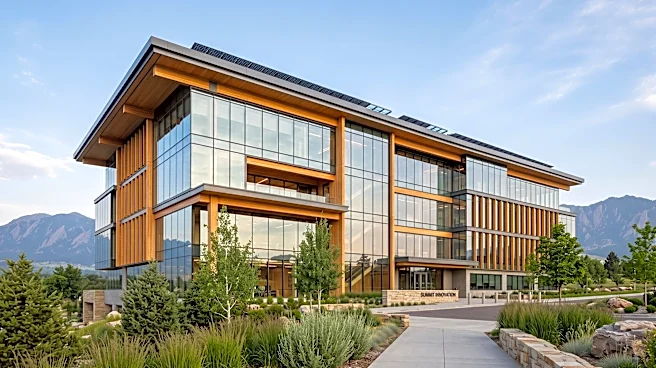
a new facility. The new Hensel Phelps Headquarters (HPHQ) will be a four-story, 143,000-square-foot building designed to accommodate the company's continued growth and evolving operational needs. It will serve as a central hub for corporate teams and provide spaces for employees from across the enterprise to collaborate, learn, and exchange ideas. The design incorporates flexible workspaces, training areas, and collaborative environments to support various work styles and adapt to future changes. Natural light, expansive views of the Rocky Mountain foothills, and exterior connections to the landscape are also key design elements aimed at enhancing the workplace experience. The project is pursuing LEED v5 Gold and WELL Platinum certifications, integrating environmental performance and human well-being into its design. A solar power system is planned to generate at least 20 percent of the building's peak electrical demand, and mass timber will be used in the structure to reduce embodied carbon.
Why It's Important?
The construction of Hensel Phelps' new corporate headquarters signifies a significant investment in the Loveland, Colorado region and reinforces the company's long-term commitment to its roots. As Hensel Phelps approaches its 90th anniversary in 2027, this new facility reflects its growth from a small local business to a national entity while maintaining a strong connection to its founding location. The project's pursuit of LEED v5 Gold and WELL Platinum certifications highlights a commitment to sustainable building practices and employee well-being, setting a precedent for environmentally conscious development in the construction industry. The incorporation of mass timber also demonstrates an embrace of innovative and sustainable construction materials, which can contribute to reducing the carbon footprint of large-scale commercial buildings. This development will likely create construction jobs and potentially attract further investment in the region, benefiting the local economy and community.
What's Next?
Construction of the new Hensel Phelps Headquarters is underway in Loveland, Colorado. The project will continue with the aim of achieving LEED v5 Gold and WELL Platinum certifications, indicating ongoing efforts to meet high standards in environmental performance and human well-being. The company's partnership with Carpentry Plus Inc. for mass timber installation suggests a continued focus on utilizing sustainable materials and providing hands-on training for craft professionals in advanced construction techniques. As the building progresses, it will be interesting to observe how the flexible workspaces and collaborative environments are utilized by employees from across the enterprise. The completion of the headquarters will mark a new chapter for Hensel Phelps, providing a modern facility to support its continued growth and operational evolution as it approaches its 90th anniversary.
Beyond the Headlines
The decision by Hensel Phelps to build its new corporate headquarters in Loveland, Colorado, despite its national expansion, underscores a broader trend of companies maintaining strong ties to their founding communities. This commitment can foster local economic stability and provide a sense of continuity for employees and the community. The emphasis on LEED v5 Gold and WELL Platinum certifications goes beyond mere compliance, reflecting a growing corporate responsibility towards environmental stewardship and employee health. This could influence other construction firms to adopt similar rigorous standards, driving a broader shift towards sustainable and health-conscious building practices within the industry. The use of mass timber also points to an evolving architectural and construction landscape where traditional materials are being re-evaluated for their environmental benefits, potentially leading to wider adoption of such materials in future commercial and residential projects across the U.S.