
What's Happening?
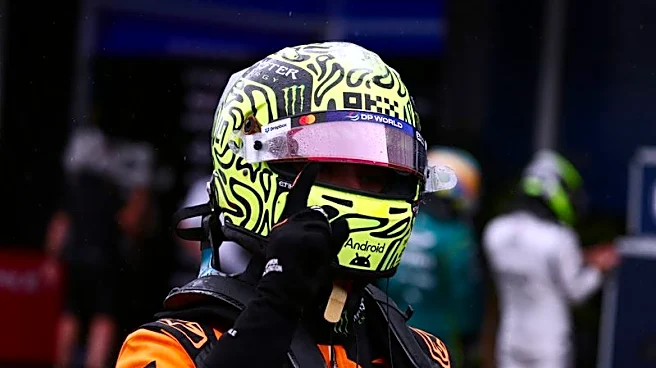
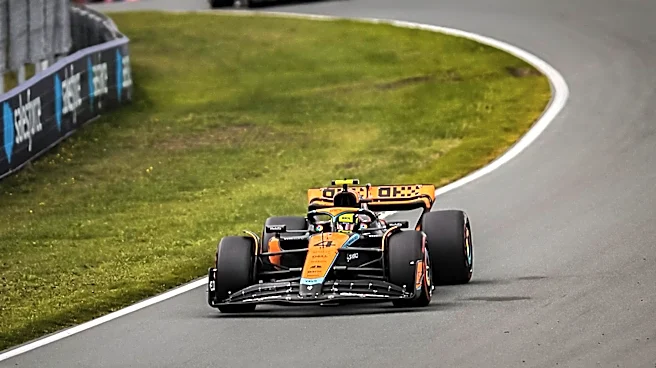
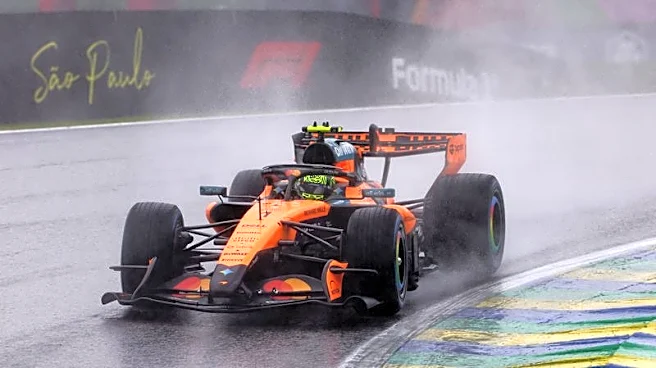
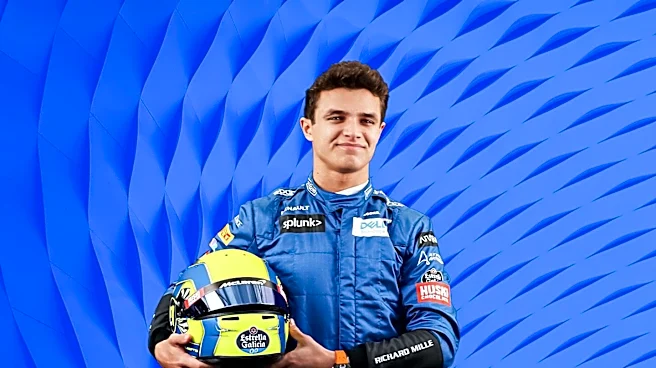
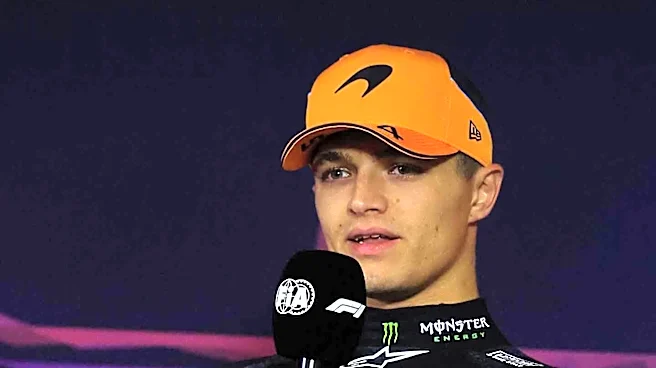
Lando Norris won the Sao Paulo Grand Prix on November 8, 2026, marking his third victory of the 2026 Formula 1 season. Starting from pole position, Norris initially dropped to third place on the opening lap, losing positions to Kimi Antonelli and Liam
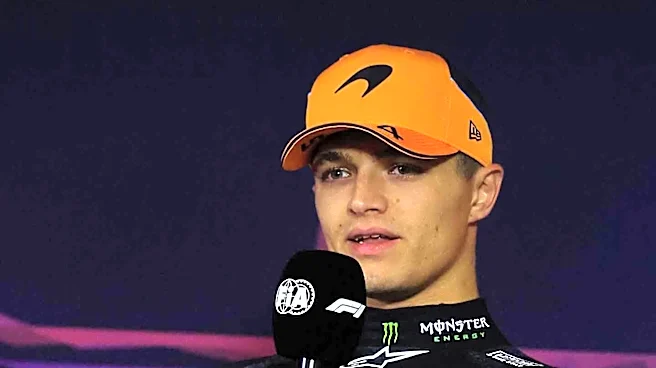
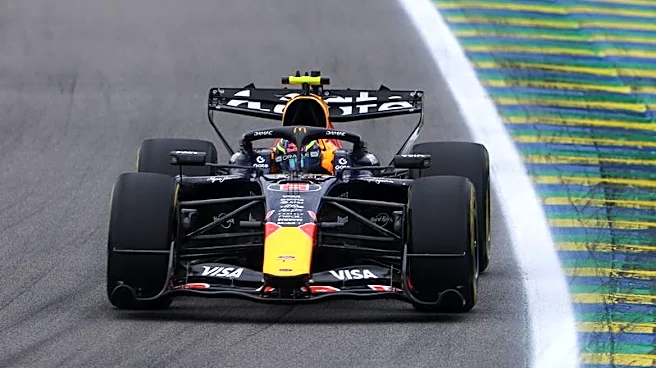
Lawson. Despite this early setback and challenging mixed weather conditions, including rain, Norris recovered to secure a commanding win, finishing over 14 seconds ahead of Max Verstappen. McLaren's strategic decision to pit Norris for slick tires a lap earlier than his rival, combined with Antonelli's spin on Lap 20, allowed Norris to regain and maintain the lead. This victory ended McLaren's five-race podium drought and coincided with the introduction of new upgrades, including a front wing, to the MCL40 car. However, Norris expressed that McLaren is still 'not at the level to fight for a world championship,' despite the recent success and upgrades.
Why It's Important?
Norris's victory in challenging conditions highlights his skill and adaptability as a driver, particularly in wet-dry races, reinforcing his reputation as a strong competitor in Formula 1. For McLaren, this win is significant as it demonstrates the effectiveness of their recent car upgrades and strategic execution, providing a much-needed boost in performance and morale. However, Norris's cautious assessment regarding the team's championship readiness indicates that while progress has been made, there are still significant gaps to close against top-tier competitors. This perspective is crucial for McLaren's development trajectory, as it suggests that further substantial improvements are required to consistently contend for the championship, impacting future investment and development decisions within the team and potentially influencing sponsor confidence and driver retention strategies.
What's Next?
Following this victory, McLaren will likely continue to analyze the performance of their recent upgrades and identify further areas for improvement on the MCL40. Norris's comments suggest an ongoing push for development to bridge the gap to championship-contending teams. The team will focus on refining their car package and strategy for upcoming races, aiming for more consistent top-tier performances. Stakeholders, including team management, engineers, and sponsors, will be evaluating the data from this race to inform future design and operational decisions. Norris himself will review his race start to address the wheelspin issue, seeking to eliminate such setbacks in future competitions. The focus will remain on continuous improvement to achieve the consistency required to challenge for a World Championship.
Beyond the Headlines
Norris's performance in the Sao Paulo Grand Prix, particularly his ability to manage variable conditions and recover from an early deficit, underscores the critical role of driver skill and adaptability in modern Formula 1. Beyond the immediate race result, this victory contributes to the narrative of Norris as a 'rain master,' a reputation that can significantly influence team strategy and driver market value. His candid assessment of McLaren's championship readiness, despite a win, reflects a pragmatic approach to team development, emphasizing long-term goals over short-term successes. This perspective can foster a culture of continuous improvement within McLaren, pushing them to innovate further. The interplay between driver feedback, engineering development, and strategic decision-making will be crucial in determining McLaren's trajectory in the highly competitive world of Formula 1, potentially shifting dynamics within the sport's top teams.