



What's Happening?
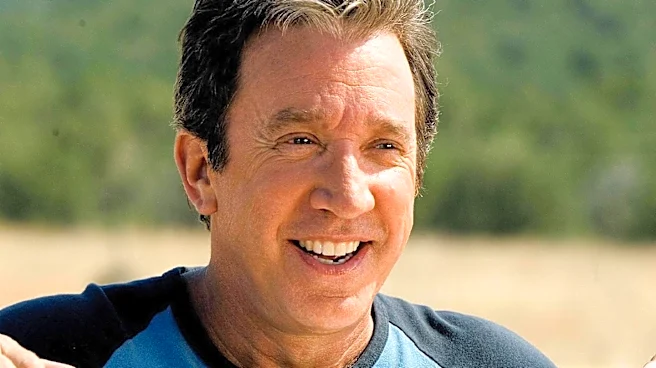
The popular Disney film 'The Santa Clause,' starring Tim Allen, which premiered 32 years ago, has inadvertently caused widespread confusion regarding the correct spelling of 'Santa Claus.' The movie's title, a pun combining 'Santa Claus' with the legal
term 'clause,' has led many viewers, particularly those who grew up with the film, to believe that Santa's last name is spelled 'Clause' with an 'e.' This cultural impact is noted as a significant, albeit unintended, consequence of the film's success. The movie, released on November 11, 1994, features Tim Allen as Scott Calvin, a divorced father who becomes the new Santa Claus due to a contractual 'clause' after accidentally causing the original Santa's demise. The film was a box office hit, grossing $190.5 million against a $22 million budget, and spawned sequels and a Disney+ series, 'The Santa Clauses,' in 2022 and 2023.
Why It's Important?
This phenomenon highlights the profound and sometimes unexpected influence of popular culture, particularly film, on public knowledge and common understanding. The widespread misspellings of 'Santa Claus' due to 'The Santa Clause' demonstrate how a creative linguistic choice in entertainment can subtly alter perceptions and even basic literacy for a generation. This impact extends beyond mere spelling, touching upon how narratives can shape collective memory and cultural norms. For educators, it presents a unique challenge in correcting a misconception deeply ingrained by a beloved holiday tradition. For marketers and content creators, it underscores the power of branding and naming conventions, even when unintended side effects arise. The film's enduring popularity ensures that this linguistic quirk will likely persist, affecting how future generations perceive and spell a fundamental figure of American holiday culture.
What's Next?
The cultural impact of 'The Santa Clause' is likely to continue as the franchise remains popular, with the Disney+ series 'The Santa Clauses' having released its second season in 2023. This ongoing presence in media means that new generations will continue to be exposed to the film's title, potentially perpetuating the spelling confusion. While there are no immediate plans to address this linguistic issue directly within the franchise, the discussion around it may prompt greater awareness among parents and educators. Future holiday-themed content might become more mindful of such potential impacts, though it is unlikely to change the established title of this iconic film. The film's status as a Christmas classic ensures its continued viewership, solidifying its place in American holiday traditions and, consequently, its subtle influence on language.
Beyond the Headlines
The case of 'The Santa Clause' offers a fascinating insight into the intersection of entertainment, language, and cultural memory. It illustrates how a clever pun, intended for comedic and narrative effect, can have a lasting, albeit minor, impact on the collective consciousness. This phenomenon goes beyond simple misspellings; it speaks to the power of media to subtly re-educate or mis-educate the public on seemingly trivial details. The film's success in embedding a specific spelling into the minds of millions underscores the pervasive nature of popular culture and its ability to shape perceptions, even on subjects as universally recognized as Santa Claus. It also raises questions about the responsibility of creators in how their work might influence public understanding, even in lighthearted contexts.