





What's Happening?
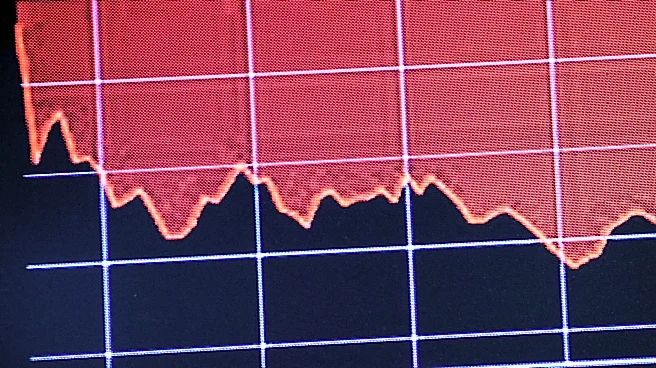
Micron Technology (NASDAQ:MU) shares experienced a significant drop of approximately 10% in morning trading on Wednesday, contributing to a 33% decline over the past month. This downturn follows deepening concerns regarding memory prices and a rating
cut by BNP Paribas. BNP Paribas analyst Karl Ackerman downgraded Micron's recommendation from Outperform to Neutral and substantially reduced its price target from $1,700 to $775. Ackerman's analysis suggests that the supply of memory could meet demand by mid-2027, which is earlier than the firm's previous projection of mid-2028. This accelerated timeline for supply-demand equilibrium increases the risk of lower memory prices. Additionally, the bank cited reduced high-bandwidth memory content in Nvidia's Vera Rubin Ultra platform, anticipated decreases in PC and mobile shipments in 2026 and 2027, and the introduction of new wafer capacity as contributing factors. There is also growing uncertainty surrounding data-center expansion plans for 2028. Despite these concerns, Micron reported strong fiscal fourth-quarter results, with revenue climbing 379.3% to $54.23 billion and non-GAAP earnings of $33.42 per share, surpassing the analyst consensus of $31.35. The company also forecasted first-quarter revenue of $61.5 billion, plus or minus $1.5 billion.
Why It's Important?
The significant drop in Micron Technology's stock, a major player in the semiconductor industry, signals potential shifts in the broader technology market, particularly concerning memory and storage solutions. The analyst downgrade and revised price target from BNP Paribas reflect a re-evaluation of future market conditions, suggesting that the current high demand and pricing for memory products might not be sustainable in the long term. This could impact other semiconductor companies and the technology sector as a whole, as memory is a critical component for various devices and data centers. The anticipated earlier balance between memory supply and demand could lead to increased competition and pressure on profit margins for memory manufacturers. Furthermore, the mention of reduced high-bandwidth memory content in Nvidia's platform and expected declines in PC and mobile shipments highlights potential headwinds for the demand side of the memory market, affecting companies reliant on these segments. The uncertainty surrounding data-center expansion plans for 2028 also indicates a cautious outlook for a key growth driver in the semiconductor industry.
What's Next?
The immediate future for Micron Technology will likely involve close monitoring of memory market dynamics, particularly the balance between supply and demand. Investors and analysts will be watching for further indications of memory price trends and the impact of new wafer capacity on the market. The company's strong fiscal fourth-quarter results and optimistic first-quarter revenue forecast suggest a degree of resilience, but the broader market sentiment, influenced by analyst reports and industry trends, will play a crucial role in its stock performance. Other memory manufacturers, such as SanDisk and SK Hynix, which also experienced declines, will likely face similar pressures and will need to adapt their strategies to potential shifts in market conditions. The industry will also be observing the evolution of data-center expansion plans and the adoption rates of new platforms like Nvidia's Vera Rubin Ultra, as these will directly influence demand for high-bandwidth memory and other semiconductor components.
Beyond the Headlines
The situation with Micron Technology extends beyond immediate stock fluctuations, touching upon the cyclical nature of the semiconductor industry. The rapid growth in demand for memory, fueled by AI and data centers, has led to a period of high profitability. However, the current concerns suggest a potential return to more traditional market cycles where oversupply can quickly lead to price erosion. This highlights the inherent volatility and risk in the semiconductor sector, where significant investments in manufacturing capacity can take years to yield returns, making accurate demand forecasting critical. The interplay between technological advancements, such as new platforms from Nvidia, and market demand for end-user devices like PCs and mobile phones, underscores the complex ecosystem that influences memory pricing. This scenario also brings to light the strategic importance of diversified customer agreements, as Micron has signed 16 such agreements covering a significant portion of its DRAM and NAND volume, which could provide some stability amidst market fluctuations.