





What's Happening?
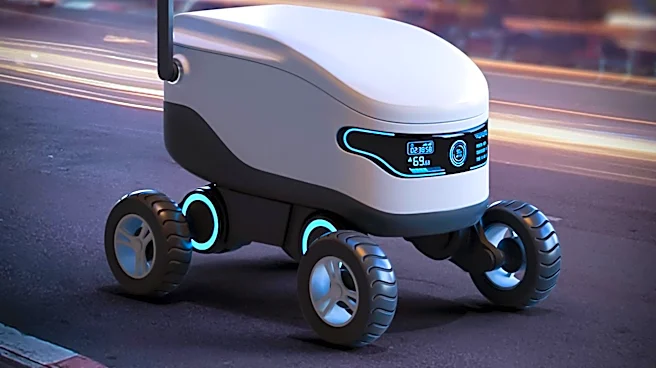
DoorDash is employing workers to load its Dot delivery robots, revealing limitations in its automation capabilities. In areas like Phoenix, Arizona, gig workers are tasked with transferring orders from restaurants to the robots, which can navigate streets
but require human assistance for loading. This initiative is part of a pilot program aimed at supporting merchants during busy periods and providing additional earning opportunities for DoorDash workers. The reliance on human intervention underscores the current technological constraints of autonomous delivery systems, as similar tasks have been observed with Waymo's self-driving cars.
Why It's Important?
The need for human involvement in loading delivery robots highlights the ongoing challenges in achieving full automation in the gig economy. While autonomous technology promises efficiency and cost savings, the current limitations necessitate human support, impacting the scalability and economic viability of such systems. This development affects gig workers, who may find new opportunities but also face uncertainty regarding job security and benefits. The situation reflects broader trends in automation, where technological advancements must balance with practical implementation challenges, influencing labor markets and business strategies.
What's Next?
As DoorDash continues to refine its autonomous delivery systems, the company may explore technological improvements to reduce human intervention. This could involve enhancing robot capabilities or redesigning operational processes. The pilot program's outcomes will likely inform future strategies, potentially influencing other companies in the gig economy. Stakeholders, including labor advocates and technology developers, will monitor these developments, assessing their implications for employment practices and the future of automated services.