






What's Happening?
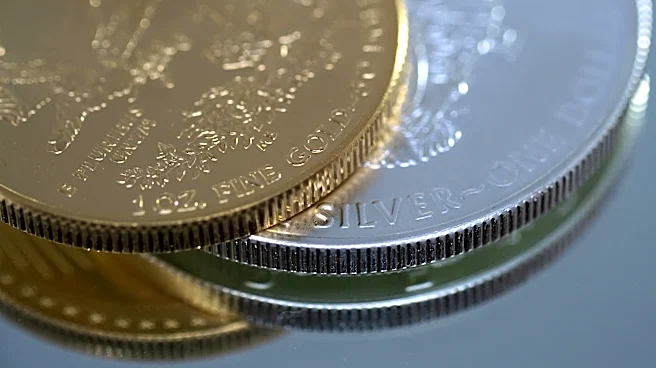
Schroders ISF Global Gold fund analysts remain optimistic about gold's long-term prospects, despite its inability to sustain recent gains above $4,000 an ounce due to elevated energy prices. The investment firm anticipates a potential sharp rally before
the end of the year. Schroders attributes its bullish outlook to persistent geopolitical uncertainty and growing fiscal pressures, which continue to drive investment demand for gold. They emphasize that short-term energy-linked selling pressures should not overshadow the long-term secular drivers supporting gold. The firm highlights two key trends: de-dollarization, fueled by geopolitical instability, and currency debasement, resulting from increasing government debt and fiscal instability. While acknowledging the U.S. economy's resilience, Schroders points to significant growth risks, including potential impacts from the political shift following the November midterm elections on the artificial intelligence economy and data center buildouts.
Why It's Important?
Schroders' continued bullish stance on gold, despite current market volatility, signals a belief in the metal's enduring value as a hedge against systemic risks. For U.S. investors and the broader economy, this perspective suggests that gold could serve as a critical asset in navigating periods of geopolitical tension and fiscal instability. The firm's focus on de-dollarization and currency debasement underscores concerns about the long-term stability of fiat currencies and the potential for gold to act as a store of value. If central banks continue to diversify their reserves away from the U.S. dollar, as Schroders notes, it could have significant implications for the dollar's global standing and U.S. economic policy. Furthermore, the mention of potential slowdowns in the artificial intelligence economy and data center buildouts due to political shifts highlights how policy changes can impact high-growth sectors, affecting investment flows and economic expansion.
What's Next?
Schroders suggests that a re-emergence of interest in fiscal hedges like gold could be triggered by events such as debt ceiling debates, with the U.S.$5 trillion increase from July 2025 already nearing exhaustion. Easing geopolitical tensions in the Middle East could also play a role, potentially leading to a sharp fall in energy prices, reduced inflation, and a reconsideration of the Federal Reserve's tightening bias. Such a shift in interest rate expectations, coupled with increasingly bearish speculative positioning in gold, could trigger significant short covering and a sharp rally into year-end. Investors will be closely watching these macroeconomic and geopolitical developments for signals that could catalyze gold's anticipated rebound. The firm's analysis implies that while current headwinds exist, the underlying structural factors favoring gold are far from exhausted.
Beyond the Headlines
The analysis by Schroders delves into deeper implications beyond immediate price movements, touching upon the fundamental shifts in the global financial landscape. The concept of de-dollarization, driven by geopolitical uncertainty, suggests a potential long-term erosion of the U.S. dollar's dominance, which could have profound effects on international trade, finance, and U.S. economic power. Currency debasement, linked to growing government debt, raises questions about fiscal sustainability and the long-term purchasing power of national currencies. These trends highlight a growing skepticism towards traditional financial instruments and a renewed appreciation for tangible assets like gold. The firm's observation about the impact of U.S. political shifts on the artificial intelligence economy also points to the increasing interconnectedness of politics, technology, and financial markets, where policy decisions can have far-reaching consequences on innovation and economic growth.