







What's Happening?
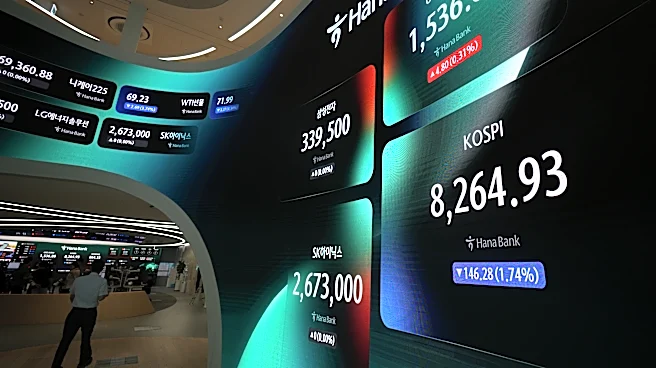
Following a record-breaking second quarter, chip stocks have experienced a significant decline at the start of the third quarter. Companies such as Micron, Intel, and Advanced Micro Devices (AMD) saw their stock values drop by 11%, 9%, and 7% respectively.
This downturn comes after these companies collectively added $2 trillion in value during the previous quarter, driven by the demand for artificial intelligence (AI) infrastructure. The VanEck Semiconductor ETF, which tracks chip stocks, also fell by more than 5% after a 71% increase from April to June. The decline is partly attributed to reports that Meta, a major AI infrastructure buyer, may rent out excess computing capacity, raising concerns that AI processing supply might be catching up with demand.
Why It's Important?
The decline in chip stocks highlights the volatility in the semiconductor market, which has been heavily influenced by the AI boom. The initial surge in stock values was driven by expectations of increased demand for memory and central processors needed for AI development. However, the recent drop suggests that the market may be adjusting to a potential oversupply. This shift could impact companies heavily invested in AI infrastructure, as well as investors who have bet on continued growth in this sector. The situation underscores the challenges of predicting market trends in rapidly evolving industries like technology and AI.
What's Next?
As the market adjusts, companies involved in AI infrastructure may need to reassess their strategies. Meta's move to potentially rent out excess capacity could signal a shift towards more enterprise-focused solutions, which might offer quicker returns on investment. Investors and companies will likely monitor these developments closely to gauge future demand and supply dynamics. Additionally, the performance of semiconductor stocks in the coming months will be crucial in determining whether the recent decline is a temporary correction or indicative of a longer-term trend.