








What's Happening?
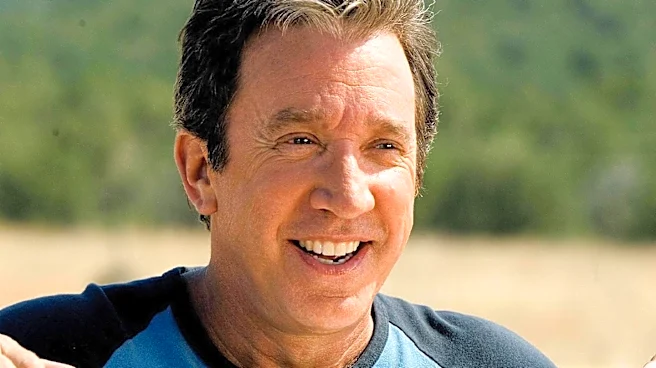
American comedian and actor Tim Allen recently shared a profound observation on the nature of existence, stating, “The world’s a mean place. It’s unfair, then it’s fair. It’s hateful, then it’s loving. It’s a very peculiar place on philosophical and metaphysical
and religious levels.” This quote, as interpreted by the source, highlights life's continuous alternation between cruelty and kindness, challenging the human tendency to seek predictability and absolute fairness. Allen's perspective is deeply rooted in his personal history, including the traumatic loss of his father at age eleven and his subsequent struggles, which led to a 1978 arrest for cocaine possession and a prison sentence. It was during this period of extreme adversity that he discovered humor as a survival tool. His journey from federal prison to achieving a rare entertainment trifecta in 1994 — having the number one rated TV show, box office movie, and bestseller — provided him with a unique vantage point on life's extremes. His philosophy is not a complaint but a mature acceptance of reality's complex texture, urging individuals to develop internal stability to navigate both suffering and joy.
Why It's Important?
Allen's philosophy holds significant importance in fostering emotional resilience and mental well-being in an unpredictable world. His observation cuts through the 'just-world fallacy,' a cognitive bias where individuals believe that good actions always lead to good outcomes and vice versa. By acknowledging that life rarely follows a single moral pattern and that fairness is not guaranteed, individuals can reduce cognitive dissonance and anxiety when faced with adversity. The ability to hold two seemingly contradictory truths simultaneously, known as cognitive flexibility, is crucial for a healthy mind. Research indicates that individuals who accept life's unpredictability demonstrate higher levels of resilience and lower rates of depressive symptoms. This perspective encourages a shift from expecting a perfect environment to genuinely living within the one we have, fostering gratitude even amidst difficulties. It underscores that moral courage, compassion, and endurance gain significance precisely because the world can be mean and unfair, making human choices and actions more meaningful.
What's Next?
Applying Allen's philosophy to daily life involves several foundational principles for practical living. It encourages understanding that progress is rarely linear, preventing panic during downturns and arrogance during triumphs. Equanimity requires relinquishing the demand for absolute fairness, recognizing that freedom comes from accepting reality on its own terms. Building emotional resilience means acknowledging life's difficulties while simultaneously appreciating its beauty, without waiting for all problems to be solved before feeling gratitude. Humor serves as a psychological buffer, creating emotional distance from hardship without denying reality. Personal agency becomes paramount when circumstances are unfair, as individuals can only control how they construct meaning and take action within shifting parameters. Finally, separating one's worth from temporary outcomes, whether public approval or personal loss, is vital, as both are transient phases in an ongoing narrative. This mindset encourages building personal and financial buffers during quiet times, practicing cognitive flexibility during crises, and being a source of warmth for others.
Beyond the Headlines
Allen's observation delves into deeper philosophical and cultural implications, resonating with ancient truths found in Stoicism and existential thought. It aligns with the doctrine of impermanence and balance, where the universe is understood as constant change, and life as opinion. This perspective challenges modern cultural narratives that often promote a fantasy of frictionless lives, achievable through wellness routines, financial strategies, or positive thinking. In a digital age where curated social media feeds condition expectations for continuous stability, Allen's words offer a counter-narrative to 'toxic positivity.' By embracing the tension between the world's coldness and warmth, individuals can stop waiting for permanent security and instead develop the internal stability to navigate life's inherent dynamism. This acceptance does not imply passive resignation to injustice but rather a call to cultivate inner strength while still striving for a fairer society within one's sphere of influence, recognizing that grace and love gain their value precisely because hostility and hate exist.