



What's Happening?
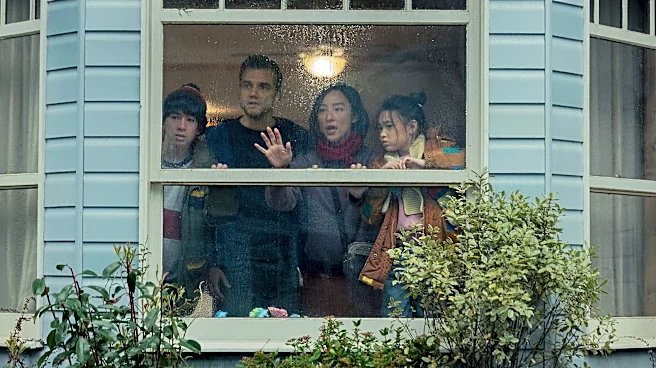
Netflix's film 'The Last House' presents a perplexing narrative that combines elements of horror, science fiction, and environmental themes. Directed by Louis Leterrier, the movie follows a Seattle family trapped in their home by mysterious sea creatures
capable of controlling water. The film explores themes of survival and environmental degradation, as the family endures five years of isolation. The creatures, resembling mythical sea monsters, appear to reclaim the planet from human pollution. The film concludes with the family being released after showing mercy to one of the creatures, suggesting a message of coexistence and environmental responsibility.
Why It's Important?
'The Last House' reflects growing concerns about environmental issues, particularly ocean pollution and its impact on marine life. The film's narrative, while fantastical, underscores the real-world consequences of human actions on the environment. By depicting a scenario where nature fights back, the movie prompts viewers to consider the importance of sustainable practices and the need to address environmental challenges. The film's release on a major platform like Netflix amplifies its potential to reach a wide audience, raising awareness about ecological issues and encouraging discussions on environmental stewardship.
Beyond the Headlines
Beyond its immediate narrative, 'The Last House' raises questions about humanity's relationship with nature and the ethical implications of environmental neglect. The film's portrayal of mythical creatures as protectors of the planet suggests a shift in perspective, where humans are no longer the dominant force. This narrative invites viewers to reflect on their role in preserving the environment and the potential consequences of failing to do so. The film's blend of genres also highlights the evolving nature of storytelling in cinema, where traditional boundaries are blurred to convey complex messages.