






What's Happening?
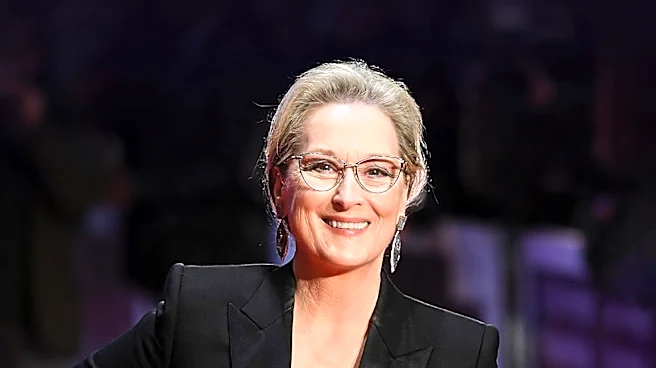
Meryl Streep has publicly voiced her dissatisfaction with her role in the 1982 thriller 'Still of the Night,' describing it as one of her most frustrating career experiences. According to Streep, her character in the film was a 'cipher,' and her primary
directive was merely to 'look good.' She felt objectified, noting that the focus was entirely on her appearance, including hair and lighting, rather than any inner depth or character development. The film, an homage to Alfred Hitchcock directed by Robert Benton, reunited Streep with Benton after their Oscar-winning collaboration on 'Kramer vs. Kramer.' However, Streep believes Benton leaned too heavily into Hitchcock's controversial depiction of women, particularly the 'Hitchcock blonde' trope, which she found disappointing and lacking in substance. Despite the film's critical panning, Streep emerged unscathed, winning her 'Best Actress' Oscar that same year for 'Sophie’s Choice,' a role that allowed her to showcase her talent in a powerful leading capacity.
Why It's Important?
This revelation from Meryl Streep highlights a persistent issue within the entertainment industry regarding the portrayal and objectification of women. Her experience in 'Still of the Night' underscores the challenges female actors, even those of Streep's caliber, face when roles prioritize superficial aesthetics over substantive character development. This can influence the types of roles offered to women and perpetuate stereotypes, potentially limiting artistic expression and reinforcing gender biases in media. For the industry, Streep's comments serve as a reminder of the importance of creating well-rounded, complex female characters. Her ability to quickly pivot to an Oscar-winning performance in 'Sophie's Choice' in the same year also demonstrates the resilience and talent required to navigate such industry pressures, ultimately influencing audience perceptions of female agency and depth in film.
Beyond the Headlines
Streep's critique of her 1982 role extends beyond a single film, touching upon broader ethical and cultural dimensions within Hollywood. Her experience reflects a historical pattern where female characters, particularly in thrillers, were often reduced to their physical appearance or served as plot devices rather than fully realized individuals. This 'Hitchcock blonde' archetype, while iconic, has been criticized for its inherent objectification and limited scope for female agency. Streep's comments contribute to an ongoing dialogue about gender equality in film, prompting deeper consideration of how women are written, cast, and directed. It also raises questions about the responsibility of filmmakers to move beyond traditional, often reductive, portrayals and to foster environments where actors can explore characters with genuine depth and complexity, thereby influencing cultural narratives and challenging entrenched stereotypes.