




What's Happening?
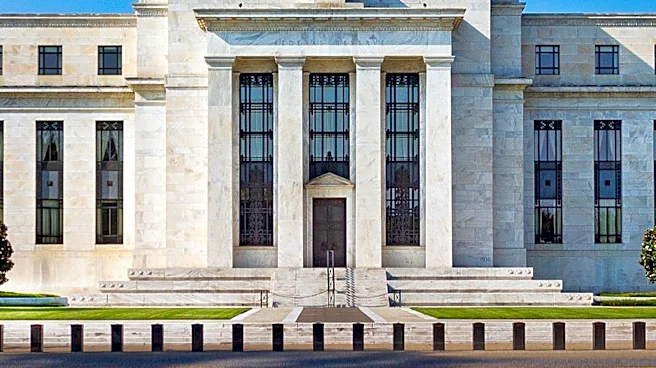
Federal Reserve Governor Christopher Waller issued a warning regarding the potential risks associated with tokenized assets, specifically highlighting the danger of underlying blockchains failing. Speaking at The Clearing House's annual meeting in New
York, Waller described these failing networks as 'zombie chains.' He explained that if the blockchains supporting tokenized stocks, bonds, and other assets cease to function correctly, investors could face significant challenges. These challenges include difficulties in confirming asset ownership and disruptions to trading and transfer processes. Waller emphasized that technological solutions alone are insufficient to resolve issues such as smart contract malfunctions, lost private keys, or erroneous transfers. He stressed the ongoing need for clear definitions of asset ownership, custodial responsibilities, and robust legal protections within the realm of tokenized finance. Despite these concerns, Waller expressed support for responsible payment innovation and believes that central bank money should maintain a fundamental role in the evolution of stablecoins and other tokenized financial instruments.
Why It's Important?
Governor Waller's warning underscores critical vulnerabilities in the rapidly evolving landscape of tokenized finance, which aims to integrate traditional financial assets with blockchain technology. The potential for 'zombie chains' poses a significant threat to investor confidence and market stability, as the inability to verify ownership or transfer assets could lead to substantial financial losses. This concern is particularly relevant as more traditional financial institutions explore and adopt blockchain for various asset classes. The emphasis on legal and custodial frameworks, rather than solely technological solutions, highlights a gap in current regulatory and operational structures for tokenized assets. His remarks signal that regulators are closely scrutinizing the foundational integrity of blockchain systems used for financial instruments, suggesting a potential push for more stringent oversight and clearer legal guidelines to protect investors and ensure market functionality. The call for central bank money to play a foundational role also indicates a desire to maintain stability and control within the digital asset ecosystem.
What's Next?
The concerns raised by Governor Waller are likely to prompt increased scrutiny from financial regulators and policymakers regarding the resilience and governance of blockchain networks used for tokenized assets. Financial institutions involved in or considering tokenization may need to reassess their risk management frameworks and due diligence processes for underlying blockchain technologies. Discussions around establishing clearer legal definitions for asset ownership and custodial responsibilities in the context of distributed ledger technology are expected to gain momentum. This could lead to the development of new regulatory guidelines or industry best practices aimed at mitigating the risks of 'zombie chains' and ensuring investor protection. Furthermore, Waller's stance on central bank money's role in stablecoins suggests ongoing efforts to integrate digital assets within existing financial infrastructures while maintaining a degree of centralized control and stability, potentially influencing future policy decisions on digital currencies and stablecoin regulation.
Beyond the Headlines
Governor Waller's 'zombie chain' warning extends beyond immediate financial risks, touching upon deeper implications for the future of digital asset infrastructure and legal frameworks. The concept highlights a fundamental tension between the decentralized, trustless nature often associated with blockchain and the traditional financial system's reliance on established legal entities and custodial responsibilities. If blockchain networks can simply 'die,' rendering assets inaccessible, it challenges the very premise of immutable and secure digital ownership without robust legal recourse. This raises profound questions about the long-term viability and trustworthiness of purely decentralized systems for critical financial functions. It also points to a potential future where hybrid models, combining blockchain's efficiency with traditional legal and regulatory safeguards, become the norm. The discussion implicitly calls for a re-evaluation of what constitutes 'ownership' in a digital, tokenized world and how legal systems can adapt to protect rights when the underlying technological infrastructure fails, pushing the boundaries of property law and digital jurisprudence.