

What's Happening?
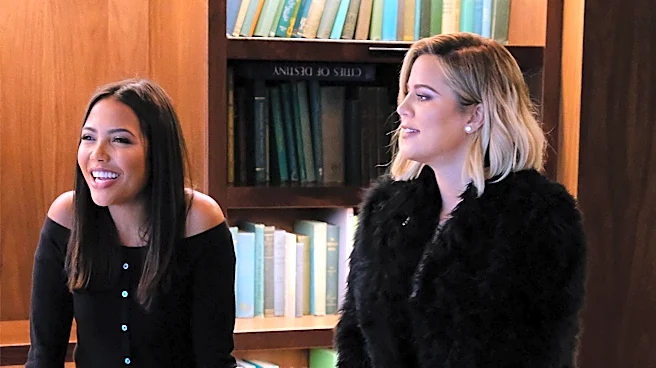
Khloe Kardashian recently explored the concept of demisexuality during an episode of her podcast, 'Khloe in Wonder Land,' with her friend Simon Huck. Huck shared his therapist's recent assessment that he is demisexual, prompting Kardashian to inquire
about the term. Huck defined demisexuality as experiencing romantic and intimate feelings only after establishing a close emotional relationship, making one-night stands nearly impossible. Kardashian, noting her own lack of one-night stands, questioned if she might also be demisexual, to which Huck confidently affirmed. The discussion highlighted that identifying as demisexual does not automatically apply to anyone who dislikes one-night stands, but it underscores the fluid nature of conversations surrounding sexuality and personal identity. According to Cathy Renna, director of communications at the National LGBTQ Task Force, a demisexual person experiences sexual attraction only after developing a close emotional bond. GLAAD further clarifies that demisexuality falls under the asexual umbrella, where individuals may experience some sexual attraction but only in specific situations, such as after forming a strong emotional or romantic connection.
Why It's Important?
This public discussion by a prominent figure like Khloe Kardashian brings increased visibility to demisexuality, a lesser-known sexual orientation within the broader LGBTQ+ spectrum. Such conversations can help normalize diverse sexual identities and encourage individuals to explore and understand their own feelings without stigma. For many, hearing a public figure discuss these topics can validate their own experiences and provide language to describe their feelings, as evidenced by social media comments praising the recognition and individuals learning they might be demisexual. This dialogue contributes to a more inclusive understanding of sexuality in mainstream culture, moving beyond traditional binary definitions. It also highlights the ongoing evolution of how society discusses and categorizes sexual attraction, emphasizing that personal identity is often a journey of self-discovery rather than a fixed state. Increased awareness can foster greater empathy and understanding for individuals who identify as demisexual, potentially reducing feelings of isolation and promoting acceptance.
What's Next?
The conversation initiated by Khloe Kardashian is likely to continue sparking discussions across social media platforms and in broader cultural contexts. As more public figures and media outlets engage with topics like demisexuality, there may be a gradual increase in public understanding and acceptance of diverse sexual orientations. Educational resources from organizations like the National LGBTQ Task Force and GLAAD may see increased traffic as individuals seek more information. This could lead to more nuanced portrayals of relationships and sexual identity in media, moving beyond conventional narratives. While Kardashian's discussion is not a definitive 'coming out,' it contributes to an ongoing cultural shift where personal identity, including sexual orientation, is openly explored and discussed, potentially encouraging others to share their own experiences and seek understanding. This trend suggests a continued evolution in how society perceives and categorizes human relationships and attractions.
Beyond the Headlines
The discussion around demisexuality, particularly when amplified by celebrities, touches upon deeper societal implications regarding how intimacy and relationships are perceived and valued. In a culture often characterized by instant gratification and casual encounters, the concept of demisexuality challenges prevailing norms by emphasizing emotional connection as a prerequisite for sexual attraction. This can prompt a re-evaluation of relationship dynamics and the pressures individuals face to conform to certain dating behaviors. Ethically, it underscores the importance of individual agency in defining one's own sexuality and the right to experience attraction on one's own terms. Legally and socially, increased awareness of diverse sexual identities can contribute to broader LGBTQ+ advocacy efforts, promoting inclusivity and protection against discrimination. Culturally, it reflects a growing trend towards more nuanced self-identification and a rejection of rigid labels, fostering an environment where personal experiences are prioritized in understanding human sexuality.