







What's Happening?
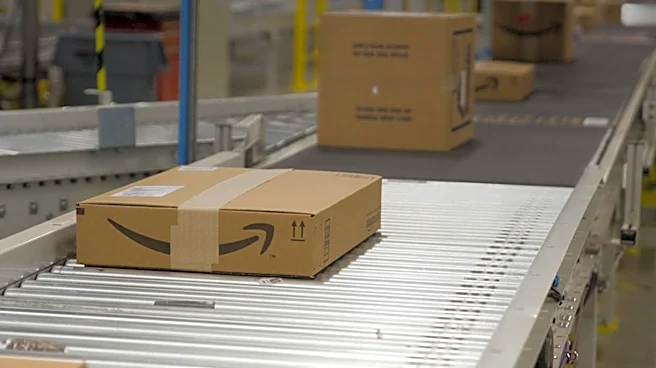
Amazon is reportedly developing a highly automated version of its delivery stations, known internally as 'Project Tetromino.' These stations are the final warehouse stop before packages are dispatched to customers. The initiative aims to create 'fully
automated' delivery hubs capable of sorting packages approximately 2.5 times faster than Amazon's current designs. This move signifies a shift towards greater machine assistance in tasks traditionally performed by humans, such as sorting parcels, arranging their sequence, and loading them for delivery. The project's name, Tetromino, may allude to the efficient packing of items, similar to the game Tetris. A planning document reviewed by Business Insider outlined a potential $103 million pilot for 2028, followed by additional facilities in subsequent years, though Amazon has stated this outline does not match its current plans and described Tetromino as an 'early-stage concept' with inaccurate cost figures. Other companies like FedEx, UPS, and DHL are also exploring or expanding the use of AI-powered robots for similar logistics tasks.
Why It's Important?
The potential implementation of fully automated delivery hubs by Amazon could significantly impact the logistics and e-commerce sectors in the U.S. By dramatically increasing sorting speeds, Amazon could further reduce delivery times, setting new industry standards and intensifying competition among retailers. This automation drive could lead to substantial cost savings for Amazon in the long run, as it reduces reliance on human labor for repetitive tasks. However, it also raises concerns about job displacement within Amazon's extensive delivery station workforce. The shift from human to machine assistance in these facilities, which have historically been challenging to mechanize due to the variable nature of package sorting, represents a major technological leap. For consumers, this could mean even faster and more consistent delivery services, while for the labor market, it signals a continued trend of automation impacting blue-collar jobs in the warehousing and logistics industries.
What's Next?
While Amazon has characterized Project Tetromino as an 'early-stage concept' and disputed specific timelines and cost figures, the company's continued investment in automation suggests a future where its logistics network is increasingly machine-driven. Amazon is likely to continue piloting and refining automated solutions in its delivery stations, potentially expanding these technologies from European trials to its U.S. operations. The development of such advanced systems will likely involve further collaboration with AI and robotics startups, similar to the mentioned Boxbot, which specializes in AI retrieval tools for package handling. The broader industry will be closely watching Amazon's progress, as successful implementation could prompt competitors to accelerate their own automation efforts to maintain competitiveness in the rapidly evolving e-commerce landscape. The long-term implications will include ongoing discussions about the balance between technological advancement and workforce impact.
Beyond the Headlines
The pursuit of fully automated delivery hubs by Amazon, exemplified by Project Tetromino, highlights a broader societal and economic shift towards advanced automation and artificial intelligence in the workplace. This trend raises ethical questions about the future of labor, particularly for roles involving repetitive physical tasks. While automation promises increased efficiency and potentially lower costs for businesses, it also necessitates a reevaluation of workforce training and development to prepare for a changing job market. The 'Tetris'-like problem of efficiently packing items, which the project's name alludes to, symbolizes the complex optimization challenges that AI and robotics are increasingly designed to solve. This technological evolution could lead to a more streamlined and resilient supply chain, but it also underscores the need for proactive strategies to address the socio-economic impacts of widespread automation on communities and individual livelihoods.