







What's Happening?
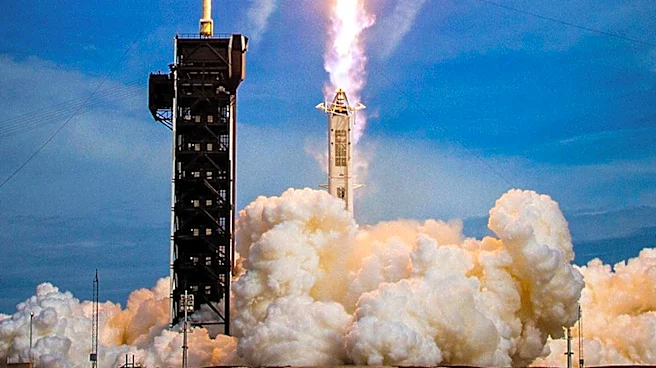
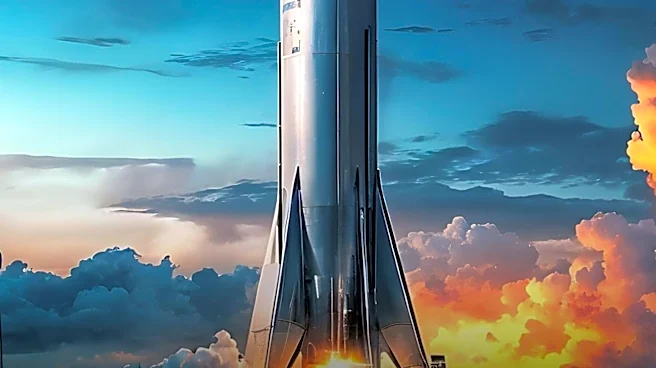
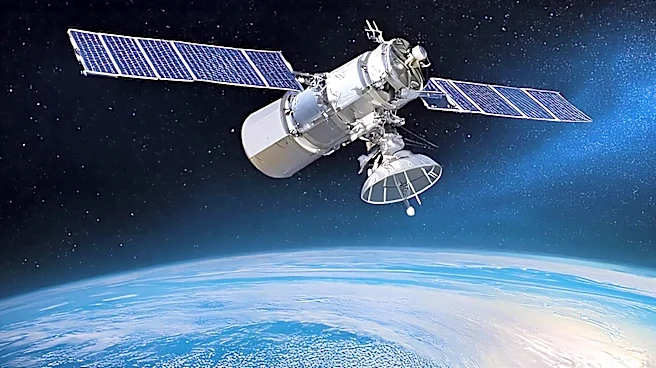
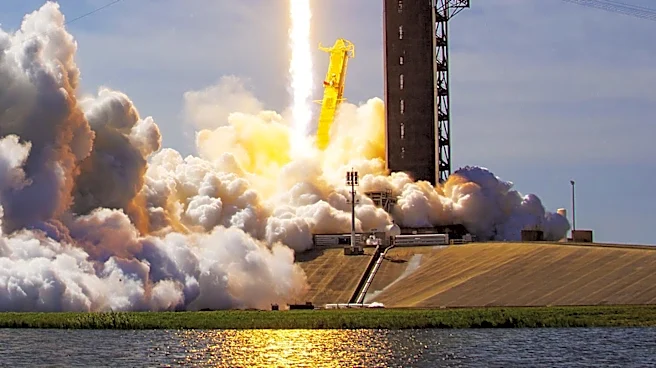
SpaceX is preparing for a test flight of its Starship rocket on July 16, 2026, which will carry next-generation V3 Starlink satellites. These satellites are designed to connect to the existing Starlink constellation via high-capacity lasers, significantly
increasing broadband capacity. However, a new study suggests that even with the V3 satellites, Starlink will remain best suited for low-density markets. The V3 satellites are expected to support higher customer density per square mile, but the capacity constraints in individual hex cells will limit their impact in more densely populated areas.
Why It's Important?
The deployment of V3 satellites represents a major technological advancement for SpaceX, potentially expanding its broadband service to more remote and underserved areas. However, the study indicates that Starlink's competitive impact will remain limited in urban and suburban markets, where fiber and cable broadband services dominate. This suggests that while Starlink can provide valuable connectivity in rural areas, it may not significantly disrupt existing broadband providers in more populated regions. The findings highlight the challenges of scaling satellite internet services to compete with established terrestrial networks.