






What's Happening?
Food technology startups Ever After Foods (EAF) and Roslin Technologies have announced a significant breakthrough in cultivated meat production. By combining EAF's tissue production system with Roslin Technologies' advanced cell platform, they have achieved
dramatically higher protein concentration and record levels of productivity. Specifically, the collaboration resulted in structured cultivated tissue with 19 times higher cultivated protein and dry biomass productivity, and 11 times higher wet biomass productivity, compared to a standard stirred-tank suspension benchmark. This was accomplished by expanding Roslin's porcine cells in suspension, mechanically dissociating them, and then inoculating them directly into EAF's bioreactor where they attached to a plant-based edible scaffold. The process achieved a cell density of 150 million cells per ml in nine days, a 62-fold increase, and boosted per-cell protein and dry biomass yield fourfold. This innovation addresses a key challenge in the cultivated meat sector, which has historically focused on increasing cell density, but now demonstrates improved efficiency in producing edible protein and structured tissue.
Why It's Important?
This breakthrough has significant implications for the economic viability and commercialization of cultivated meat. Manufacturing productivity is a major factor determining whether cultivated meat can become cost-effective and competitive with traditional meat products. Higher output from the same cultivation volume means potentially less equipment, infrastructure, and operating costs per kilogram of product. EAF CEO Eyal Rosenthal notes that their techno-economic modeling indicates the potential for substantial reductions in both capital and production costs compared with conventional stirred-tank approaches. This advancement could accelerate the widespread adoption of cultivated meat, offering a more sustainable and ethical alternative to conventional animal agriculture. For consumers, it could eventually lead to more affordable and accessible cultivated meat products. For the U.S. food industry, this could open new markets and investment opportunities in cellular agriculture, potentially disrupting traditional meat production and supply chains.
What's Next?
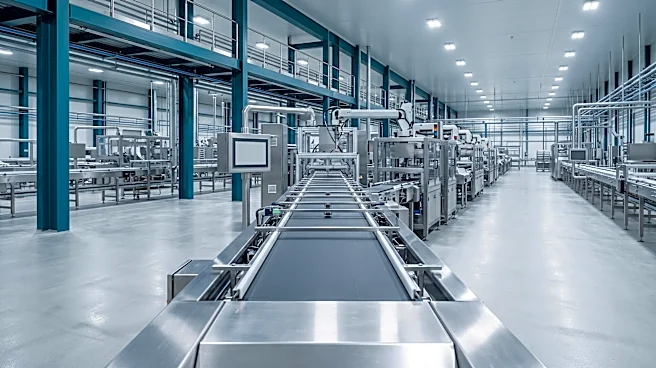
Ever After Foods and Roslin Technologies are now focusing on additional development and scale-up work to advance their combined cell and tissue production platform. EAF, primarily a manufacturing technology company, plans to supply its production platform and collaborate with other cultivated meat companies to enable industrial-scale production. They have developed a 200-liter modular production system with Bühler, and industrial-scale validation is their next major milestone. The company is also exploring cultivated seafood and pet food opportunities, particularly after acquiring Fishway, which expanded their capabilities in aquatic cell biology. While pet food is an attractive early application, it is not their sole route to market. EAF is also advancing regulatory preparations for priority markets, including the U.S., with approvals depending on relevant regulatory processes and specific products being developed.
Beyond the Headlines
The success of this collaboration highlights a broader trend in the food industry towards innovative solutions for sustainable protein production. The ability to produce cultivated meat with higher protein content and efficiency could mitigate environmental concerns associated with traditional livestock farming, such as greenhouse gas emissions and land use. Ethically, it offers an alternative that avoids animal slaughter. The development of edible scaffolds and the direct production of structured biomass also represent a significant step towards creating cultivated meat products that closely mimic the texture and experience of conventional meat. This technological leap could reshape consumer perceptions and acceptance of lab-grown foods, potentially leading to a paradigm shift in how meat is produced and consumed globally, with the U.S. playing a crucial role in its adoption and regulation.