







What's Happening?
U.S. Rep. Glenn "GT" Thompson (R-Pa.) and Rep. Andrea Salinas (D-Ore.) have jointly introduced the bipartisan Mass Timber Growth and Innovation Act. This legislation aims to address two key issues: lowering housing costs and providing support for the American
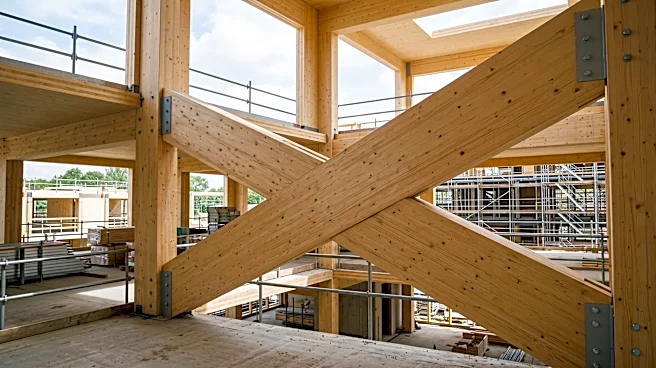
timber industry. The bill's introduction signifies a collaborative effort across party lines to tackle economic challenges related to housing affordability and the sustainability of a vital domestic industry. While specific details of the bill's mechanisms for achieving these goals are not fully elaborated in the source, the focus on "mass timber" suggests an emphasis on innovative construction materials and methods that could offer cost efficiencies and environmental benefits.
Why It's Important?
This bipartisan bill is important because it seeks to address critical economic and environmental issues facing the United States. High housing costs are a significant burden for many American families, and legislative efforts to reduce these costs can have a broad positive impact on household budgets and economic stability. Simultaneously, supporting the American timber industry is crucial for job creation, rural economic development, and sustainable forest management. The use of mass timber, an engineered wood product, can offer a more sustainable and potentially more cost-effective alternative to traditional construction materials like concrete and steel. By promoting innovation in the timber industry, the bill could enhance domestic manufacturing capabilities, reduce reliance on imported materials, and contribute to a greener construction sector. This legislative collaboration also demonstrates a willingness among lawmakers to find common ground on issues that affect diverse regions and economic sectors.
What's Next?
The Mass Timber Growth and Innovation Act will now proceed through the legislative process in Congress. This will involve committee hearings, potential amendments, and votes in both the House and Senate. The bipartisan nature of the bill, with sponsors from both Republican and Democratic parties, suggests it may have a better chance of garnering broader support and eventual passage. If enacted, the legislation could lead to increased investment in mass timber production facilities, research into new timber technologies, and incentives for builders to utilize mass timber in construction projects. This could stimulate growth in the American timber industry, create new jobs, and potentially lead to a reduction in construction costs, ultimately impacting housing affordability. The bill's progress will be closely watched by stakeholders in the housing, construction, and timber industries.
Beyond the Headlines
The introduction of the Mass Timber Growth and Innovation Act points to a broader shift in how policymakers are approaching sustainable development and economic growth. Mass timber construction offers not only potential cost savings but also significant environmental benefits, such as carbon sequestration and reduced embodied energy compared to conventional materials. This bill could accelerate the adoption of green building practices in the U.S., contributing to climate change mitigation efforts and promoting a more sustainable built environment. Furthermore, by supporting the American timber industry, the legislation could help revitalize rural economies that have historically relied on forestry, ensuring that these communities benefit from the transition to more sustainable practices. The bipartisan collaboration on this issue also highlights a potential pathway for addressing complex challenges by focusing on shared economic and environmental goals, transcending traditional political divides.