







What's Happening?
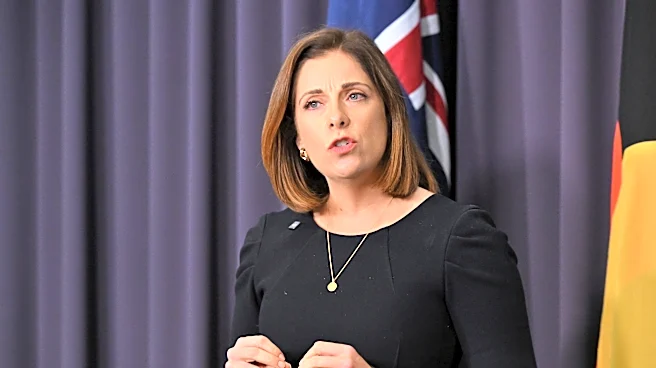
Australia's Parliament has passed the Digital Duty of Care bill, a new piece of legislation aimed at creating a safer online environment. This bill replaces the Online Safety Act 2021 and introduces a 'digital duty of care' for online service providers,
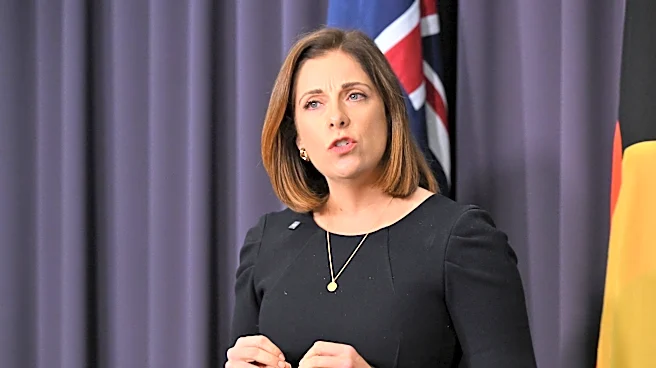
requiring them to implement measures to protect users from seriously harmful and illegal content. Communications Minister Anika Wells stated that the core of this duty is to ensure all Australians are protected online by shifting the responsibility upstream to product designers. Companies that fail to comply with these new online safety rules could face significant penalties, with fines reaching up to 5% of their global revenue. The bill also expands the powers of the eSafety Commissioner to regulate online services, content, and conduct, mandating the swift removal of harmful content.
Why It's Important?
This legislative development in Australia holds significant implications for major U.S. tech companies, which are frequently in the Australian government's regulatory crosshairs. The imposition of fines up to 5% of global revenue for non-compliance could result in billions of dollars in penalties, directly impacting the financial performance and operational strategies of these tech giants. This move could serve as a blueprint for other countries grappling with the proliferation of harmful online content, potentially leading to a global trend of stricter online safety regulations. For U.S. tech firms, this means a potential increase in compliance costs, a need to re-evaluate their content moderation policies, and a possible restructuring of their product design processes to proactively prevent harm. The legislation underscores a growing international push to hold technology companies more accountable for the content hosted on their platforms, affecting their business models and global market access.
What's Next?
The Digital Duty of Care bill is set to come into effect in one year, giving online service providers a grace period to adapt to the new regulations. During this time, U.S. tech companies operating in Australia will likely need to review and update their online safety protocols, content moderation systems, and product design to align with the expanded powers of the eSafety Commissioner and the requirements of the digital duty of care. The effectiveness of this bill in curbing harmful content will be closely watched by other nations, potentially influencing future legislative efforts in the U.S. and elsewhere. Furthermore, Australia's ongoing consideration of forcing large internet companies to pay licensing fees to news and media companies indicates a broader regulatory trend that could further impact the operational landscape for U.S. tech firms.
Beyond the Headlines
The Australian Digital Duty of Care bill represents a significant shift in the global approach to online regulation, moving beyond reactive content removal to proactive harm prevention at the design stage. This 'safety by design' philosophy could set a new ethical standard for technology development, compelling companies to embed safety considerations from the outset rather than as an afterthought. The legislation also highlights the increasing tension between national sovereignty in regulating online spaces and the global, borderless nature of the internet. For U.S. tech companies, this could necessitate a more localized and nuanced approach to product development and content governance, moving away from a one-size-fits-all global strategy. The potential for other countries to adopt similar frameworks could lead to a fragmented regulatory environment, posing complex legal and operational challenges for companies accustomed to operating under more uniform global standards.