






What's Happening?
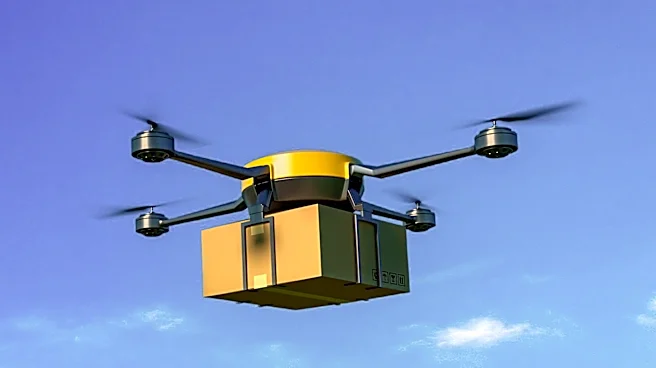
Wing, a subsidiary of Google's parent company Alphabet, is actively developing and deploying drone delivery services as a solution for last-mile logistics. The company emphasizes its drone delivery as a safe, fast, and sustainable method for transporting
small packages directly from businesses to homes. Wing's highly automated delivery drones are designed to operate within a 10-mile radius of participating locations, capable of reaching speeds up to 70 mph. The technology is built for easy integration into existing delivery and logistics networks, aiming to provide a scalable drone delivery solution for a wide array of businesses. Wing designs, builds, and operates its own aircraft and currently offers drone delivery services across two continents. The company's mission is to establish drone delivery as a preferred method for package transportation globally.
Why It's Important?
The advancement of drone delivery by companies like Wing holds significant implications for the U.S. logistics and retail sectors. Traditional last-mile delivery methods are often characterized by inefficiencies, high costs, and contributions to road accidents and air pollution. Wing's drone solution addresses these challenges by offering a more efficient, potentially less costly, and environmentally friendlier alternative. This could lead to a transformation in how goods are delivered, particularly for on-demand services, impacting consumer expectations and business operational models. For businesses, it presents an opportunity to reduce delivery times and costs, while for consumers, it promises faster and more convenient access to products. The scalability of Wing's technology suggests a potential for widespread adoption, which could reshape urban and suburban delivery landscapes and create new economic opportunities within the drone technology and logistics industries.
What's Next?
Wing is actively seeking to expand its commercial operations and market presence, as indicated by its recruitment for a Head of Product & Partner Marketing. This role is central to defining Wing's value proposition, orchestrating commercial positioning across various platforms, and aligning commercial messaging with aviation and safety standards. The company plans to build insights and intelligence capabilities to refine its product roadmaps based on user feedback and market data. Furthermore, Wing aims to strengthen partnerships with businesses and integrate its technology into existing delivery networks. Future developments will likely involve expanding its operational footprint, enhancing its drone technology, and navigating regulatory landscapes to facilitate broader adoption of drone delivery services in the U.S. and internationally. The focus on B2C demand and B2B merchant enablement suggests a strategic push to grow both consumer usage and business partnerships.
Beyond the Headlines
The proliferation of drone delivery services like Wing's raises several deeper implications beyond immediate logistical benefits. Ethically, the increased presence of drones in airspace could lead to concerns about privacy, noise pollution, and potential safety risks, necessitating robust regulatory frameworks. Legally, the integration of drones into national airspace requires continuous development of air traffic management systems and clear guidelines for operation, liability, and data security. Culturally, widespread drone delivery could alter consumer behavior, making instant gratification more commonplace and potentially impacting local retail dynamics. Long-term shifts could include a reduction in road traffic congestion and emissions from delivery vehicles, contributing to environmental sustainability. However, it also presents challenges in ensuring equitable access to these services and managing the societal impact of automation on traditional delivery jobs.