



What's Happening?
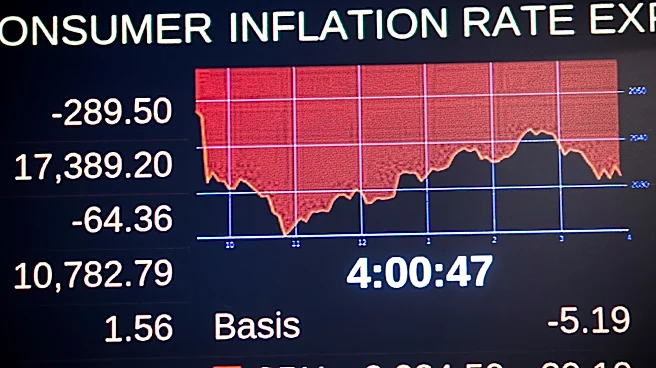
New York Federal Reserve president John Williams has indicated that the central bank is unlikely to implement a 50-basis-point interest rate hike in December, despite recent inflation data showing higher-than-expected price growth. The Consumer Price
Index (CPI) increased by 0.4% in October, surpassing the anticipated 0.3%, while core inflation, which excludes volatile food and energy prices, rose by 0.3%, aligning with September's figures but exceeding expectations of 0.2%. Williams acknowledged that the data presents a "pretty clear signal" that inflation remains a concern and emphasized the Fed's commitment to bringing inflation down to 2% in a timely and sustained manner. He also pointed to AI investments as a likely "persistent" factor contributing to rising prices, particularly in sectors like semiconductors, and noted that the strength in the economy, partly driven by AI and a robust stock market, could necessitate further rate adjustments.
Why It's Important?
This development is significant for the U.S. economy as it signals the Federal Reserve's cautious approach to monetary policy despite ongoing inflationary pressures. By ruling out a larger rate hike, the Fed aims to avoid dramatic actions that could potentially destabilize financial markets or hinder economic growth, while still addressing inflation. The acknowledgment of AI investments as a persistent inflationary factor highlights a new dimension in economic analysis, suggesting that technological advancements, while beneficial, can also contribute to price increases in specific sectors. This perspective could influence future policy decisions, as the Fed considers how to manage inflation in an economy increasingly shaped by technological innovation. Investors, who had been weighing the possibility of a larger hike, now anticipate a 25-basis-point increase in December, providing some clarity and potentially reducing market volatility.
What's Next?
The Federal Reserve will continue to monitor economic data closely, particularly inflation figures and the impact of AI investments on various sectors. The decision to likely pursue a 25-basis-point hike in December suggests a measured approach, but future rate adjustments will depend on the evolving economic landscape. Williams' comments indicate that the pace and extent of future rate hikes will be influenced by the continued strength of the economy, driven by factors like AI and consumer spending. Businesses and consumers should anticipate ongoing vigilance from the Fed regarding inflation, with potential for further interest rate adjustments if price pressures persist or intensify. The focus remains on achieving the 2% inflation target, and the Fed's actions will be guided by this objective.
Beyond the Headlines
The discussion around AI investments as a persistent factor in inflation introduces a novel and complex element into economic policy. While AI is often lauded for its potential to boost productivity and efficiency, its role in driving up prices for certain goods, such as semiconductors, suggests a nuanced impact on the economy. This could lead to deeper analyses of how technological advancements influence supply chains, demand, and overall price levels. The Fed's consideration of AI's inflationary effects underscores the need for policymakers to adapt to a rapidly changing technological landscape. This also raises questions about the long-term implications of technological innovation on economic stability and the tools available to central banks to manage these new forms of inflationary pressure, potentially leading to new frameworks for understanding and addressing inflation in the digital age.