




What's Happening?
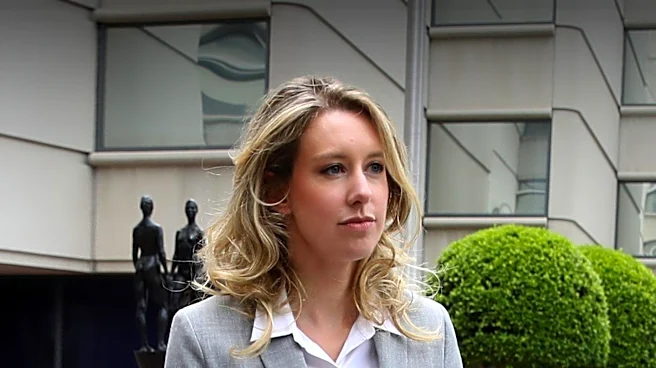
The documentary 'You Can See Everything,' directed by Nathan Fielder and Lance Oppenheim, offers an in-depth look at Elizabeth Holmes, the former CEO of Theranos, just before her incarceration. The film begins by contextualizing Holmes' story, detailing
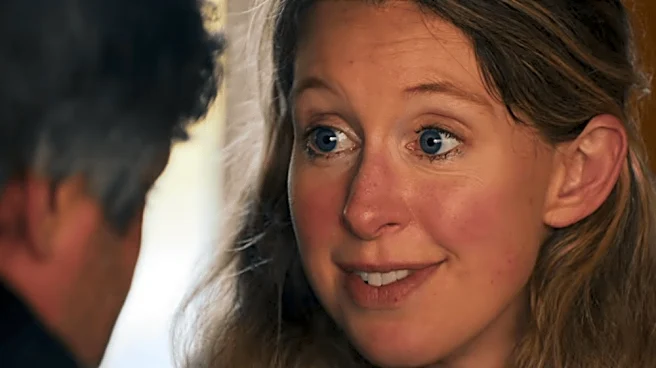
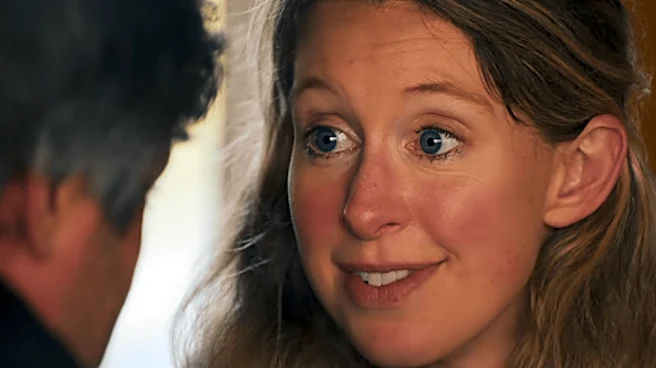
her company's fraudulent claims about blood-testing technology and her subsequent conviction for fraud. The documentary captures Holmes in her San Diego beach house rental with her partner, Billy Evans, and their young children, 34 days before she is sent to prison for 11 years. The film is structured in two parts: the initial period observing Holmes' life before jail, and a second half that incorporates reenactments and features an actor, Amanda Seyfried, to explore scenes Holmes could not film. This experimental approach blurs the lines of reality, examining how individuals perceive and present themselves, and how others interpret those perceptions. Co-director Nathan Fielder engages in conversations with Holmes, attempting to uncover her true understanding of her actions and the charges against her.
Why It's Important?
This documentary is significant for its unique approach to examining a high-profile public figure embroiled in scandal. By blurring the lines between traditional documentary and experimental filmmaking, 'You Can See Everything' challenges viewers to critically assess the nature of truth, perception, and narrative construction. The film's focus on Holmes' mental state and her continued belief in her innocence raises questions about self-deception, the impact of public scrutiny, and the psychological toll of such legal battles. It also highlights the complexities of documenting individuals who are under intense public and legal pressure, offering a nuanced perspective on a story that has largely been presented through a clear-cut lens of guilt. The involvement of Nathan Fielder, known for his unconventional documentary styles, adds another layer of intrigue, pushing the boundaries of how such stories are told and consumed.
What's Next?
The release of 'You Can See Everything' is likely to spark considerable discussion and debate among audiences and critics regarding its experimental format and its portrayal of Elizabeth Holmes. Viewers will be prompted to form their own conclusions about Holmes' guilt or innocence, her state of mind, and the ethical implications of the documentary's methods. The film's unique narrative structure, particularly the use of reenactments and an actor, may influence future documentary filmmaking, encouraging more creative and unconventional approaches to storytelling. It could also reignite public interest in the Theranos scandal, prompting further analysis of corporate fraud, Silicon Valley culture, and the justice system. The film's exploration of perception and reality will likely be a central point of discussion in film studies and media analysis.
Beyond the Headlines
Beyond the immediate narrative of Elizabeth Holmes' legal troubles, 'You Can See Everything' delves into deeper philosophical questions about identity, performance, and the construction of reality. The documentary implicitly explores whether Holmes exhibits neurodiversity, though it never explicitly diagnoses it, suggesting that her unique way of thinking might contribute to her perception of events. The film also scrutinizes the dynamics of power and manipulation, particularly through the character of Billy Evans, and how these elements influence the narrative presented to the public. By inviting viewers to constantly question what is real and what is constructed, the documentary serves as a meta-commentary on media consumption and the challenges of discerning truth in an age of curated images and narratives. It prompts a reflection on how we judge public figures and the inherent biases in our interpretations of their actions and motivations.