




What's Happening?
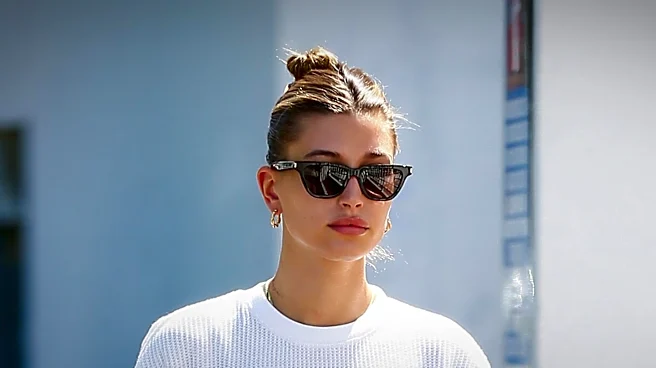
Hailey Bieber is currently facing significant social media backlash following her appearance on the French talk show 'Quotidien.' During the interview, while promoting her skincare brand Rhode, she stated that her husband, Justin Bieber, is French. This
assertion was met with visible confusion from the host, Yann Barthès, who pointed out that Justin Bieber is Canadian. Hailey doubled down on her claim, stating, 'He is from Canada but he’s also French. His family is French.' When pressed for details about where in France his family originated, she admitted she was 'not totally sure.' The controversy stems from the fact that while Justin Bieber does have French-Canadian and Acadian roots on his mother's side, he was born and raised in Stratford, Ontario, and identifies as Canadian. Many online users have criticized Hailey's comments as ignorant and an example of an 'American mindset' regarding ancestry versus nationality.
Why It's Important?
This incident highlights the broader cultural sensitivities surrounding national identity and heritage, particularly in a globalized world where celebrities often navigate diverse audiences. For Hailey Bieber, a public figure and entrepreneur, such a gaffe can impact her public image and brand perception, especially as she expands her business internationally. The online 'cringe' and 'secondhand embarrassment' expressed by netizens, including French and Canadian individuals, underscore the importance of cultural awareness and accuracy in public statements. It also reflects how quickly social media can amplify perceived missteps, turning a casual comment into a widespread debate about cultural understanding and authenticity. This event serves as a reminder for public figures to be well-informed about the cultural backgrounds they reference, especially when engaging with international media.
What's Next?
Hailey Bieber has not yet publicly responded to the widespread backlash. The viral clip continues to circulate on social media platforms, fueling ongoing discussions and criticism. It remains to be seen if this incident will have any lasting impact on her public image or her brand's reception in international markets. Future public appearances or statements from Hailey Bieber may be scrutinized more closely for cultural sensitivity. The incident could also prompt a broader conversation among public figures and their teams about the need for thorough cultural briefings before international engagements to avoid similar controversies.
Beyond the Headlines
Beyond the immediate social media uproar, this event touches upon deeper themes of cultural appropriation and the often-simplified understanding of complex national and ethnic identities. The internet's reaction, particularly the labeling of Hailey's comments as an 'American mindset,' points to a recurring critique of how some Americans perceive and claim heritage based on distant ancestry, often without a full understanding of the cultural nuances or the distinction between ancestry and nationality. This incident could spark discussions about the responsibilities of public figures to represent cultures accurately and respectfully, and the potential for misrepresentation to cause offense or perpetuate stereotypes. It also underscores the power of social media in holding public figures accountable for their statements and actions, regardless of intent.