






What's Happening?
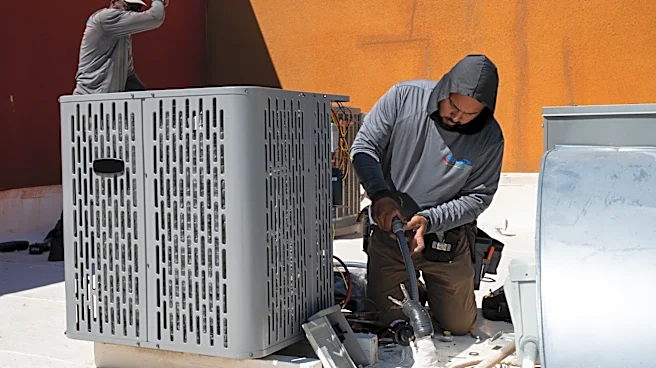
Experts have provided guidance on optimizing air conditioning usage to balance energy efficiency and comfort. According to the Associated Press, setting the thermostat a few degrees higher than normal when away from home is generally the most effective
strategy. This approach can save up to 10% annually on heating and cooling costs, as noted by the U.S. Department of Energy. However, the effectiveness of this strategy can vary based on climate conditions and the type of air conditioning unit. In humid environments, turning off the AC for extended periods can lead to mold issues, while in dry climates, it may be more feasible to let the home warm up slightly. The type of home construction and insulation also play a role in determining the best approach.
Why It's Important?
The guidance on air conditioning usage is significant as it addresses both environmental and economic concerns. By optimizing AC usage, homeowners can reduce their energy consumption, leading to lower utility bills and a smaller carbon footprint. This is particularly relevant in the context of rising energy costs and increasing awareness of climate change. The advice also highlights the importance of considering local climate conditions and home characteristics, which can influence the effectiveness of energy-saving strategies. For homeowners, this information can lead to more informed decisions about home energy management, potentially resulting in significant cost savings and environmental benefits.
What's Next?
Homeowners may consider investing in smart thermostats, which can automate temperature adjustments based on occupancy, further enhancing energy efficiency. Additionally, simple measures such as using blinds to block sunlight and applying window films can complement thermostat adjustments. As awareness of energy efficiency grows, there may be increased demand for energy-saving technologies and home improvements. This could lead to advancements in smart home technology and greater availability of energy-efficient home products. Furthermore, as climate conditions continue to change, ongoing research and adaptation of energy-saving strategies will be necessary to address evolving environmental challenges.