








What's Happening?
Digital marketing is a broad field dedicated to understanding and implementing processes for creating, informing, delivering, and exchanging products and services to provide value for customers and society. It leverages various digital channels to promote
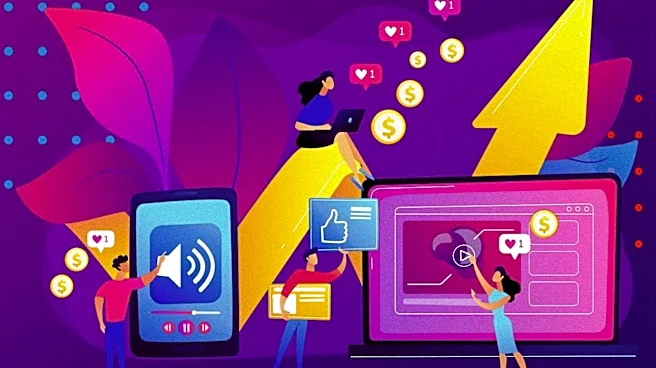
products, services, brands, or ideas. Key types of digital marketing include content marketing, email marketing, affiliate marketing, influencer marketing, and search engine optimization (SEO). Content marketing focuses on creating and sharing valuable information to attract and educate potential customers through formats like blog posts, articles, and infographics. Email marketing facilitates communication with current and prospective customers via updates, offers, and newsletters. Affiliate marketing involves individuals or businesses promoting another company's products for a commission. Influencer marketing utilizes content creators with established online audiences to introduce products through reviews and sponsored posts. SEO aims to improve website visibility in search engine results by optimizing content and technical performance. Other significant types include social media marketing, pay-per-click (PPC) advertising, video marketing, mobile marketing, and conversion rate optimization (CRO). Each method offers distinct benefits for businesses aiming to enhance brand awareness, drive traffic, and generate leads online.
Why It's Important?
The diverse landscape of digital marketing is crucial for U.S. businesses of all sizes to effectively reach and engage their target audiences in an increasingly online world. By understanding and strategically implementing various digital marketing types, companies can build brand awareness, attract potential customers, and ultimately increase sales. For instance, SEO and content marketing are vital for long-term organic visibility, helping businesses establish authority and trust with consumers. PPC advertising offers a quick way to generate targeted traffic and leads, which is particularly beneficial for new product launches or seasonal campaigns. Social media marketing allows for direct engagement with customers, fostering community and loyalty. Small businesses, in particular, stand to gain significantly from digital marketing as it provides cost-effective ways to compete with larger enterprises and expand their customer base beyond geographical limitations. The ability to measure campaign performance through analytics also allows businesses to optimize their strategies, ensuring a higher return on investment and continuous improvement in their marketing efforts. Without a robust digital marketing strategy, businesses risk being overlooked in a competitive online marketplace.
What's Next?
Businesses are expected to continue refining their digital marketing strategies by integrating multiple approaches to create comprehensive customer journeys. The trend towards personalized and data-driven marketing will likely intensify, with companies leveraging advanced analytics to tailor content and offers to individual customer preferences. The evolution of artificial intelligence and machine learning will further enhance capabilities in areas like predictive analytics, automated content generation, and hyper-targeted advertising, allowing for more efficient and effective campaigns. Mobile marketing will remain a critical focus, as consumers increasingly rely on smartphones and tablets for online interactions, necessitating mobile-friendly websites and app-based engagement. Furthermore, as digital platforms evolve, businesses will need to stay agile, adapting to new social media trends, search engine algorithm updates, and emerging technologies to maintain their competitive edge. Continuous learning and adaptation will be essential for marketing professionals to navigate the dynamic digital landscape and maximize their online presence and customer engagement.
Beyond the Headlines
The proliferation of digital marketing also brings forth deeper implications concerning data privacy, consumer trust, and ethical advertising. As businesses collect vast amounts of user data to personalize marketing efforts, concerns about how this data is stored, used, and protected are growing. Regulations like GDPR and CCPA highlight the increasing importance of transparent data practices and user consent, pushing companies to adopt more ethical approaches to data handling. The rise of influencer marketing, while effective, also raises questions about authenticity and disclosure, requiring clear guidelines to ensure consumers are aware of sponsored content. Moreover, the constant bombardment of digital advertisements can lead to ad fatigue, prompting marketers to focus on creating more valuable, less intrusive content that genuinely resonates with audiences. The long-term success of digital marketing will increasingly depend not just on technological prowess but also on building genuine relationships with consumers based on trust, transparency, and the delivery of real value, moving beyond purely transactional interactions to foster brand loyalty and advocacy.