






What's Happening?
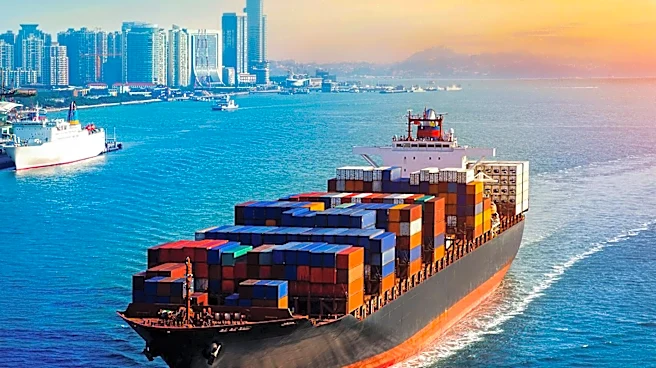
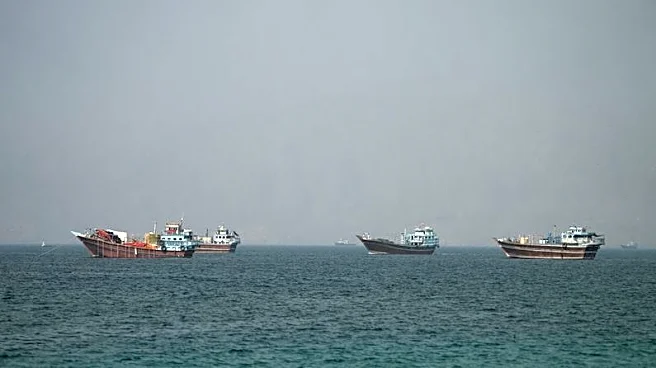
Traffic through the Strait of Hormuz is on the rise, with vessel crossings increasing significantly. This uptick in activity is contributing to a decline in oil prices, with Brent crude dropping to $73 per barrel. The increase in traffic is attributed
to a formal plan for outbound transits and the lifting of U.S. sanctions on Iran, allowing for more oil exports. Iran, benefiting from the strait's reopening, has several tankers loaded with oil ready for export. The situation remains complex, with some vessels operating under radio silence to avoid detection.
Why It's Important?
The increase in traffic through the Strait of Hormuz and the subsequent decline in oil prices are significant for global energy markets. The strait is a critical chokepoint for oil shipments, and its reopening alleviates fears of a prolonged energy crunch. The potential increase in oil supply could stabilize or even lower global oil prices, benefiting consumers and industries reliant on oil. However, the situation remains fluid, and any setbacks in U.S.-Iran negotiations could reverse these gains. The developments also highlight the interconnectedness of geopolitical events and global energy markets, underscoring the importance of diplomatic efforts in maintaining energy stability.
What's Next?
The ongoing negotiations between the U.S. and Iran will be pivotal in determining the future of oil supplies from the Persian Gulf. Any progress towards a permanent settlement could lead to a more sustained recovery in oil flows, while setbacks could reignite supply concerns. Additionally, the market will watch for any changes in U.S. sanctions policy and the impact of resumed Iranian oil exports on global supply dynamics. The situation requires careful monitoring and strategic planning to ensure stability in global energy markets.