







What's Happening?
Ørsted, a global leader in renewable energy, is actively pursuing its strategy to create a world powered entirely by green energy. The company specializes in the development and operation of offshore and onshore wind farms, solar projects, and large-scale
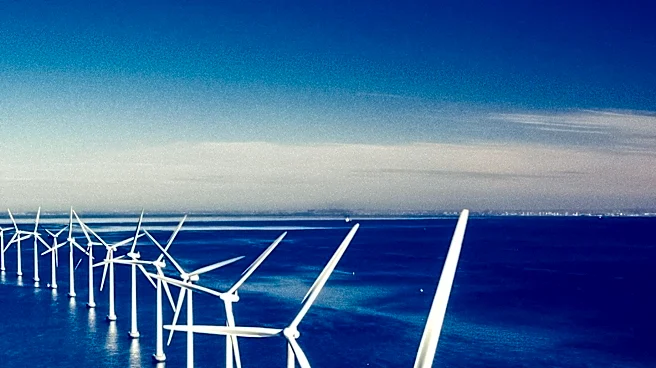
battery storage solutions. Ørsted emphasizes leveraging the curiosity and passion of its employees to innovate and scale existing technologies. This approach involves significant collaboration with governments, suppliers, and industry partners to bring renewable energy solutions to fruition. The company, founded in Denmark in 2006, has grown to approximately 8,000 employees across 15 countries. A key aspect of its operational philosophy is fostering an inclusive workplace where all employees are respected and have equal opportunities for impact and growth, regardless of age, race, ethnicity, place of birth, gender, sexual orientation, or disability. Ørsted has a notable history in offshore wind, having built the world's first offshore wind farm, Vindeby in Denmark, in 1991, and completing the world's largest, Hornsea 2 in the UK, in 2022.
Why It's Important?
Ørsted's aggressive pursuit of green energy solutions is highly significant for the U.S. and global energy landscape. As a major player in offshore wind, the company's advancements contribute directly to the diversification of energy sources and the reduction of reliance on fossil fuels. For the U.S., this translates to potential job creation in the renewable energy sector, technological transfer, and increased energy independence. The focus on large-scale projects like offshore wind farms can provide substantial, consistent power generation, which is crucial for meeting growing energy demands and stabilizing grids. Furthermore, Ørsted's commitment to inclusivity and equal opportunity in its workforce sets a precedent for other companies in the rapidly expanding renewable energy industry, promoting a more diverse and equitable talent pool. The company's collaborative approach with governments and industry partners can accelerate the deployment of green infrastructure, influencing policy and investment in sustainable energy across various nations, including the U.S.
What's Next?
Ørsted is expected to continue its expansion in renewable energy projects globally, including potential further investments and developments in the U.S. market. The company's strategy involves ongoing innovation in wind, solar, and battery storage technologies, which will likely lead to more efficient and cost-effective green energy solutions. Future steps will include continued collaboration with international governments and local communities to secure permits and develop new sites for renewable energy infrastructure. The emphasis on an inclusive workplace suggests that Ørsted will likely implement further initiatives to attract and retain a diverse talent pool, potentially influencing human resources practices within the broader energy sector. As the company brings more projects online, it will contribute to national and international targets for carbon reduction and renewable energy capacity, impacting energy policy discussions and investment trends in the U.S. and beyond.
Beyond the Headlines
Beyond the immediate impact of new energy projects, Ørsted's strategy highlights a deeper shift in corporate responsibility and sustainable development. The company's vision of a world running entirely on green energy underscores a global imperative to address climate change and transition to sustainable practices. This commitment extends beyond technological innovation to include social dimensions, such as fostering an inclusive workplace. This approach suggests that leading companies in the green economy are increasingly recognizing the interconnectedness of environmental sustainability, social equity, and economic viability. For the U.S., this could influence corporate governance standards, encouraging other businesses to adopt similar holistic strategies that integrate environmental, social, and governance (ESG) principles. The long-term implications include a potential redefinition of energy security, moving from fossil fuel dependence to a diversified, renewable energy portfolio that is resilient and environmentally responsible.