



What's Happening?
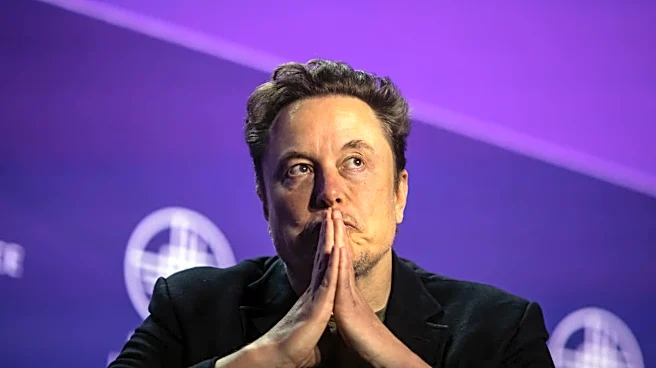
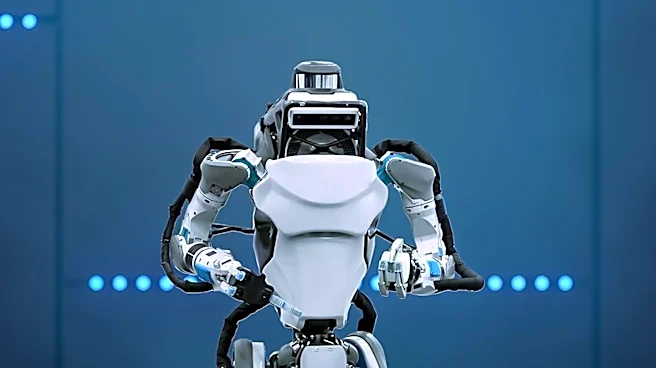
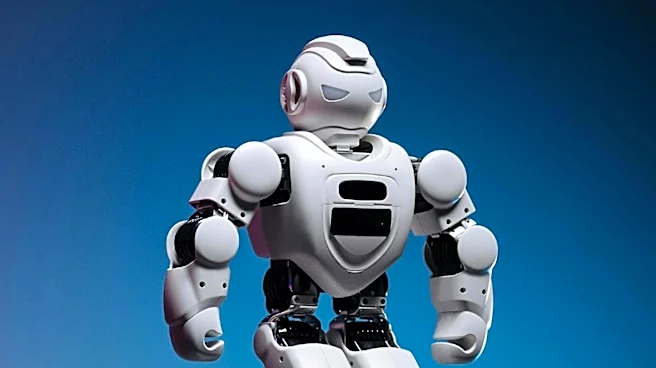
Elon Musk has made a bold prediction regarding the future of artificial intelligence (AI) and its impact on society. In a recent interview, Musk suggested that within five years, AI could surpass human intelligence, leading to the creation of up to one
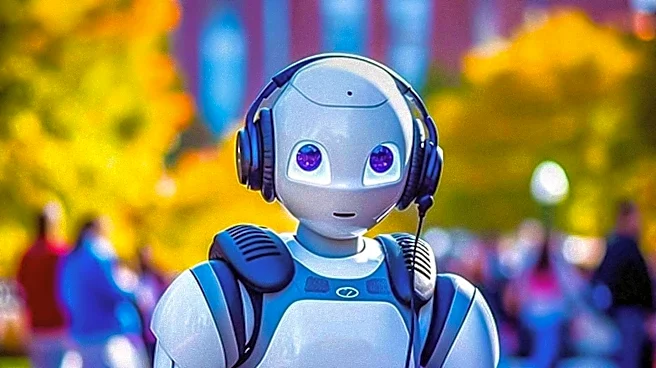
billion humanoid robots. These robots, he claims, could replace manual labor, ushering in an 'age of abundance' where economic output doubles and traditional concepts of saving for retirement become obsolete. Musk's vision includes a future where AI performs tasks better than humans, potentially making cash meaningless. This prediction aligns with the development of Tesla's Optimus robot, a general-purpose worker robot. However, Musk's views are met with skepticism by some experts who warn of mass joblessness and the need for governance in the AI era.
Why It's Important?
Musk's predictions highlight the transformative potential of AI on the global economy and labor markets. If realized, the widespread adoption of humanoid robots could lead to significant job displacement, particularly in manual and white-collar sectors. This shift could necessitate new economic models, such as universal basic income, to support those affected by automation. The potential doubling of economic output could lead to unprecedented growth, but also raises questions about wealth distribution and the ownership of AI technologies. The debate over AI's impact underscores the need for policymakers to address the ethical and societal implications of rapid technological advancement.
What's Next?
As AI technology continues to evolve, stakeholders including governments, businesses, and civil society must prepare for its potential impacts. This includes developing regulatory frameworks to manage AI's integration into the workforce and ensuring equitable distribution of its benefits. The conversation around AI's role in society is likely to intensify, with discussions focusing on how to balance innovation with social responsibility. The trajectory of AI development will depend on technological breakthroughs, public policy decisions, and societal acceptance of AI-driven changes.