





What's Happening?
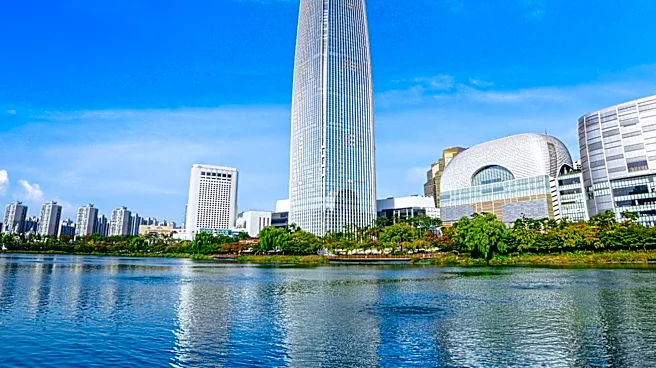
The Seoul office market is experiencing a significant restructuring of demand across various sectors, according to the '2026 Seoul Office Tenant Sector Trends Report' published by Cushman & Wakefield Korea. This analysis indicates that the market is not
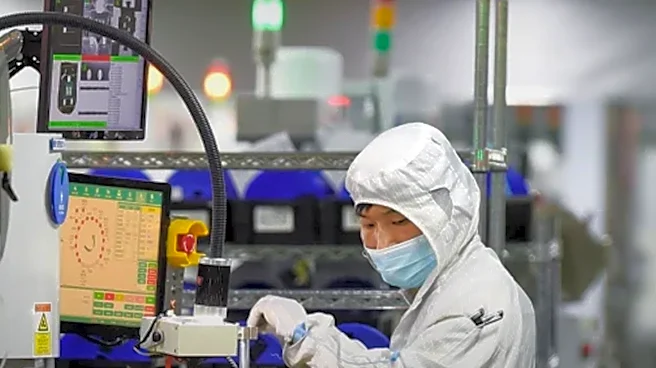
merely dividing into growth and contraction, but rather seeing a nuanced evolution in tenant needs and space utilization. The financial and service sectors are expanding their demand base through an influx of new tenants and the growth of existing companies. Conversely, the manufacturing, wholesale/retail, and construction sectors are optimizing their space, primarily driven by large tenants seeking cost reduction and operational efficiency. The IT sector is also undergoing internal changes, with new growth drivers emerging around artificial intelligence, even as some sub-sectors that grew during the remote work trend post-COVID-19 see a decline in office demand. This restructuring is evident across Seoul's major office districts, including the CBD, GBD, YBD, and Pangyo, with each region showing distinct tenant market trends.
Why It's Important?
This restructuring in the Seoul office market highlights a broader global trend where office space demand is becoming more specialized and driven by evolving industry needs rather than general economic cycles. For U.S. businesses with operations or investments in South Korea, understanding these shifts is crucial for strategic planning. Companies in the financial and service sectors may find increased competition for prime office locations, potentially leading to higher rents or a need for more flexible leasing strategies. Conversely, businesses in manufacturing, wholesale/retail, and construction might find opportunities to optimize their real estate portfolios, potentially reducing overheads. The evolution of the IT sector, particularly the rise of AI-driven demand, signals a need for office spaces that can support advanced technological infrastructure and collaborative innovation. This trend could influence how U.S. tech companies approach their global office footprints, prioritizing locations that foster AI development and talent. The report emphasizes that a deeper understanding of tenant industries and their specific patterns of relocation, expansion, and contraction is essential for effective corporate office strategies.
What's Next?
Looking ahead, the Seoul office market is expected to continue its sectoral evolution, with further differentiation in demand based on industry-specific requirements. Cushman & Wakefield Korea's report suggests that future changes will necessitate a focus beyond overall vacancy rates and rent levels, urging stakeholders to analyze the specific industries occupying office spaces. This implies that real estate developers and investors will need to tailor their offerings to meet the distinct needs of expanding sectors like finance and services, while also accommodating the space optimization strategies of other industries. The ongoing emergence of AI as a growth driver within the IT sector will likely lead to demand for specialized office environments that support technological innovation and collaboration. Companies will need to continuously assess their office strategies, considering factors such as sub-sector growth, corporate expansion stages, and the potential for cost reduction through space efficiency. This dynamic environment will require agile decision-making from both tenants and landlords to adapt to the evolving landscape of office demand.
Beyond the Headlines
The detailed analysis of the Seoul office market's restructuring points to a fundamental shift in the perception and utility of physical office space. It moves beyond the simplistic 'work from home vs. office' debate to a more nuanced understanding of how different industries leverage office environments. The emphasis on 'space optimization' by traditional sectors like manufacturing and construction suggests a strategic re-evaluation of real estate as a tool for operational efficiency and cost management, rather than just a fixed overhead. For the IT sector, the rise of AI-driven demand indicates that while some aspects of work may become remote, the need for collaborative hubs for cutting-edge innovation remains strong. This trend could lead to a bifurcation in office design and functionality, with some spaces becoming highly specialized innovation centers and others focusing on flexible, efficient layouts. This evolution has broader implications for urban planning, transportation, and the ancillary services that support office ecosystems, as cities adapt to a more fragmented and specialized demand for commercial real estate.