





What's Happening?
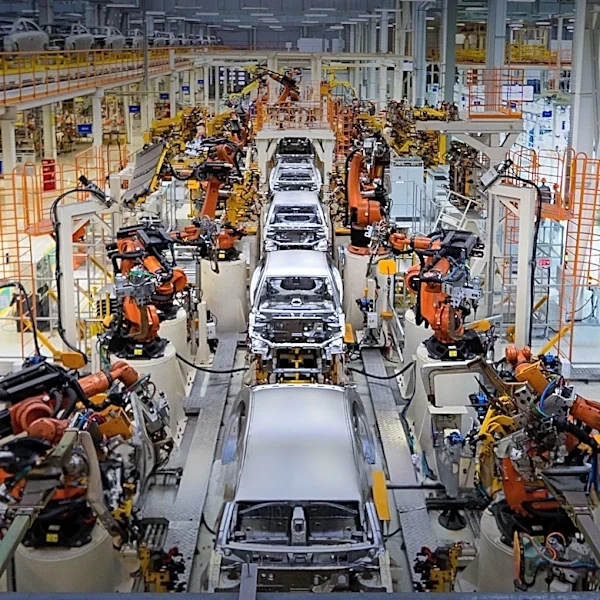
Hyundai Motor is evaluating plans to substantially expand its U.S. production capacity at the Hyundai Motor Group Metaplant America in Georgia. CEO José Muñoz indicated that the planned annual production could increase from 500,000 units to between 700,000
and 800,000 units by 2028. This potential expansion is part of Hyundai's broader strategy to invest $26 billion in the U.S. through 2028. The company aims to produce at least 80% of the vehicles it sells in the U.S. domestically by the end of the decade, a significant jump from approximately 40% in 2024. The Metaplant currently produces all-electric Hyundai Ioniq 5 and Ioniq 9 models, as well as the Kia Sportage hybrid. If realized, this capacity would make the Georgia facility the largest vehicle assembly operation by capacity in the U.S., surpassing other major manufacturers like Tesla and Toyota Motor. Hyundai is also exploring additional investments for capacity outside the Georgia Metaplant for body-on-frame vehicles such as trucks and SUVs.
Why It's Important?
This potential increase in U.S. production by Hyundai Motor Group holds significant implications for the American automotive industry and economy. A substantial boost in domestic manufacturing capacity aligns with national efforts to strengthen supply chains and create jobs within the U.S. The expansion would directly contribute to job growth, with the current plan for 500,000 units already including over 8,500 employees at the Georgia megasite and an additional 6,900 at offsite suppliers. Increasing the proportion of domestically produced vehicles to 80% would also help Hyundai mitigate risks associated with international trade and logistics, while potentially qualifying for U.S. government incentives for electric vehicle production. For consumers, increased local production could lead to more readily available vehicles and potentially more competitive pricing. The move also signals a long-term commitment by Hyundai to the U.S. market, which CEO Muñoz described as the most important market globally outside of Korea.
What's Next?
Hyundai's plans for increased production capacity are currently under consideration and not yet confirmed. The company will continue to assess market opportunities and operational requirements. If approved, the expansion would involve significant construction and hiring efforts to bring the Metaplant's capacity to 700,000-800,000 units annually by 2028. This would necessitate further investment beyond the already announced $26 billion. Additionally, Hyundai is evaluating separate investments for body-on-frame vehicle production, which could lead to new facilities or expansions at existing sites. The company's goal to produce 80% of its U.S. sales domestically by the end of the decade will drive these decisions, impacting its product launch schedule and overall market strategy in the coming years. Stakeholders, including local communities in Georgia and the broader U.S. automotive sector, will be closely watching these developments.
Beyond the Headlines
The potential expansion by Hyundai Motor Group reflects a broader trend of foreign automakers increasing their manufacturing footprint in the U.S., driven by market demand, government incentives, and a desire for greater supply chain resilience. This move could intensify competition within the U.S. automotive market, particularly in the electric vehicle segment, as Hyundai aims to become a dominant player. The focus on producing a high percentage of vehicles domestically also highlights the strategic importance of the U.S. as a manufacturing hub, potentially influencing other global automakers to follow suit. Furthermore, the emphasis on electric and hybrid vehicles at the Metaplant underscores the ongoing transition of the automotive industry towards electrification, with significant implications for energy infrastructure, battery technology, and skilled labor development in the U.S. The decision to consider additional capacity for trucks and SUVs also indicates a strategic response to strong consumer preferences in the American market.