






What's Happening?
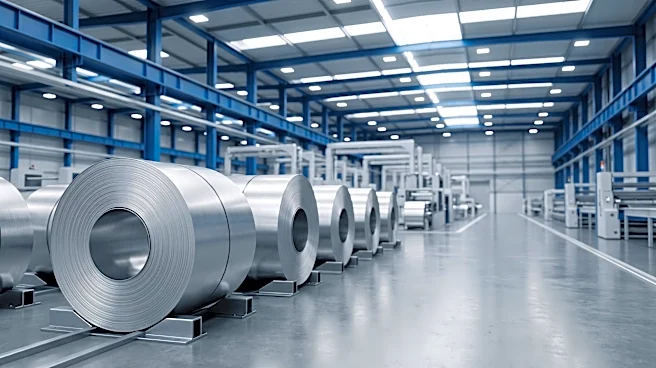
On Friday, Iowa Governor Kim Reynolds signed House File 2801, which amends the tax credit incentives offered through the state’s Major Economic Growth Attraction (MEGA) program. These amendments are designed to facilitate a historic $15 billion investment
by Mesabi Metallics, a Minnesota-based iron ore mining company, to construct and operate a steel manufacturing plant in Iowa. The original MEGA program allowed tax incentives of up to 5% for each of two eligible businesses, totaling 10% of qualifying investments. The new amendments permit a single eligible business in a rural county to receive a tax incentive of up to 10% of qualifying investments, spread evenly over ten years and transferable. This project represents the largest investment in American steel manufacturing in U.S. history.
Why It's Important?
This legislative action and the subsequent investment are profoundly significant for Iowa and the broader U.S. manufacturing sector. The $15 billion steel mill project is expected to inject substantial capital into Iowa's economy and create thousands of high-paying, family-sustaining jobs, particularly in rural areas. Governor Reynolds emphasized that higher wages will attract workforce, strengthen local businesses, and foster community growth, accelerating the state's economic trajectory. House Speaker Pat Grassley highlighted that the legislation includes taxpayer-first safeguards, ensuring performance incentives are earned only after facilities are built and jobs are delivered. This initiative positions Iowa as a national leader in modern steel production and contributes to energy independence, aligning with broader national goals of strengthening domestic manufacturing and reducing reliance on foreign supply chains.
What's Next?
With the legislative amendments signed, Mesabi Metallics is now poised to move forward with the construction of the $15 billion steel manufacturing plant in Iowa. The focus will shift to the implementation phase, including site preparation, hiring, and the commencement of construction. State and local officials will likely work closely with Mesabi Metallics to ensure the project adheres to the agreed-upon timelines and job creation targets. The economic impact will be closely monitored, particularly regarding job growth, local business development, and the overall contribution to Iowa's GDP. Future discussions may involve further infrastructure development to support the large-scale operation and potential workforce training programs to equip residents with the necessary skills for the new jobs.
Beyond the Headlines
This development underscores a broader trend of reshoring manufacturing and investing in critical industries within the U.S. The substantial tax incentives offered by Iowa reflect a competitive environment among states to attract large-scale industrial projects, highlighting the role of state-level policy in national economic development. The project's emphasis on modern steel production also points to advancements in manufacturing technology and the drive for efficiency and sustainability in heavy industries. Furthermore, the focus on rural development through such a significant investment could serve as a model for revitalizing economies in areas that have historically faced economic challenges. The long-term success of this venture could influence future policy decisions regarding industrial incentives and regional economic strategies across the nation.