




What's Happening?
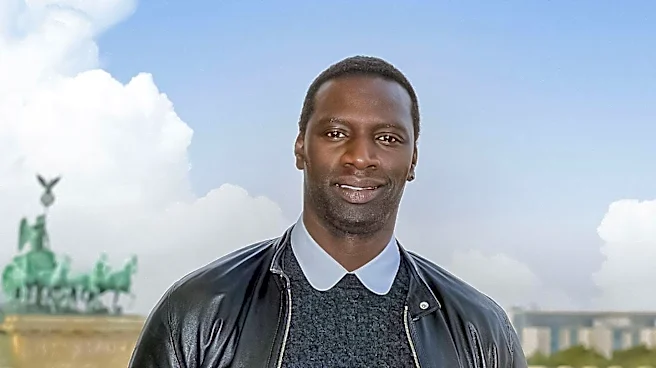
Omar Sy, the internationally recognized French actor known for his Senegalese heritage, is actively promoting the 2026 Youth Olympic Games (YOG26) in Dakar, Senegal. The event, scheduled from October 31 to November 13, 2026, marks a historic occasion
as the first Olympic event to be held on the African continent. Sy is serving as an ambassador for Dakar 2026, alongside other prominent figures like Italian-Senegalese influencer Khaby Lame and Senegalese national soccer team captain Kalidou Koulibaly. The YOG26 aims to bring together 2,700 young athletes from 206 National Olympic Committees and the Refugee Olympic Team to compete in 25 sports across eight venues in Dakar, Diamniadio, and Saly. The motto for the games is 'Africa Welcomes, Dakar Celebrates,' symbolizing the continent's hospitality and the festive energy of Senegal's capital. The event is designed to promote universal values such as respect, brotherhood, solidarity, and excellence, which resonate deeply with Islamic values, given that it's the first time the Olympic spirit will be celebrated in a country with a large Muslim majority.
Why It's Important?
The Dakar 2026 Youth Olympic Games hold significant importance beyond the sporting competitions. For Senegal, it represents a transformative project for its youth, its international image, and its economy. The event is expected to generate economic and financial benefits across various sectors, including tourism, hospitality, food service, employment, transportation, services, crafts, cultural activities, digital technologies, and sports-related professions. A key objective is to leave a human legacy, not just infrastructure, through programs like the Dakar 2026 Learning Academy, which aims to train over 400 young professionals in careers related to organizing sporting events. The games also offer Senegal a unique opportunity to strengthen its influence in Africa, demonstrate its organizational capabilities, increase its international visibility, and position Dakar as a leading African capital for sports and youth. The emphasis on universal values and the celebration of the Olympic spirit in a Muslim-majority country also carries significant diplomatic and geopolitical implications, fostering unity and understanding in a global context often marked by conflict.
What's Next?
In the lead-up to Dakar 2026, promotional efforts by ambassadors like Omar Sy will continue to raise global awareness and engagement for the Youth Olympic Games. The International Olympic Committee (IOC) has also appointed renowned athletes to provide personalized support and lead training workshops for young competitors, focusing on career management, injury prevention, and mental preparation. Senegal is actively seeking support from countries like Qatar, leveraging their expertise in organizing major sporting events, particularly in areas such as venue and infrastructure management, security, logistics, and volunteer management. This collaboration aims to ensure the sustainable use of infrastructure after the games and to create a lasting sporting legacy. The Dakar 2026 organizers are focused on ensuring that the event's impact extends beyond the competitions, aiming to foster a 'Dakar 2026' generation capable of enduring far beyond the games through tangible legacies like infrastructure and intangible legacies such as acquired skills and reshaped life paths for the youth.
Beyond the Headlines
The Dakar 2026 Youth Olympic Games, championed by figures like Omar Sy, highlight a deeper shift in the global sporting landscape, emphasizing inclusivity and the expansion of the Olympic movement into new regions. Hosting the first Olympic event in Africa carries profound cultural and social implications, challenging traditional perceptions and promoting a more diverse representation of global sports. The focus on universal values and the integration of Islamic values within the Olympic spirit underscore a broader effort to use sports as a platform for cross-cultural dialogue and understanding. Furthermore, the emphasis on a 'human legacy' and the training of young professionals points to a long-term vision that extends beyond mere athletic competition, aiming to empower local communities and foster sustainable development. This approach could serve as a model for future international events, prioritizing community impact and skill development alongside sporting excellence, and showcasing the potential of sports to drive social and economic transformation.