



What's Happening?
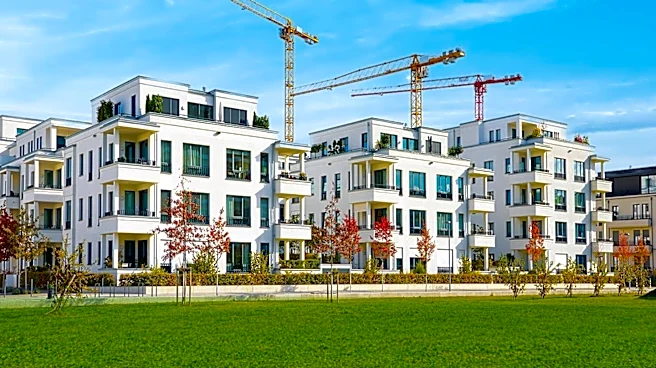
A study by Matthew E. Kahn and Wesley A. Miller of the University of Southern California, published by the Brookings Institution, reveals that homeowners in urban cores experience greater insurance market stress compared to their suburban counterparts,
despite often having lower exposure to natural hazards. The researchers developed a Local Insurance Strain Index (LISI) using ZIP code-level data from 2018 to 2022, which measures affordability (premiums relative to income), availability (insurer nonrenewal rates), and insurer profitability. While national trends show higher insurance strain in areas prone to wildfires, tornadoes, and flooding, the within-metropolitan area analysis presents a different picture. Homeowners insurance strain is highest in urban centers, decreasing sharply within the first five miles from downtown and then leveling off in suburban areas. Urban homeowners face nonrenewal rates approximately 20% higher and average premiums 39% higher than those in suburban ZIP codes more than five miles from downtown. These higher costs are attributed to non-environmental risks prevalent in dense urban environments, such as theft, burglary, older housing stock leading to more plumbing and appliance claims, and higher repair costs due to labor, materials, and building code requirements.
Why It's Important?
This Brookings Institution study is significant because it reframes the understanding of homeowners insurance market stress, shifting focus from solely climate-related risks to a more nuanced, within-metro phenomenon. For U.S. urban planning and housing policy, the findings highlight an often-overlooked financial burden on city residents, potentially exacerbating urban affordability crises. The higher insurance costs in urban areas can disproportionately affect lower-income households and contribute to gentrification pressures, as the increased cost of homeownership makes urban living less accessible. The study also points to a critical asymmetry in public policy: while government-supported programs often absorb catastrophe risks in disaster-prone areas, urban homeowners lack comparable public backstops for risks associated with density, older buildings, and crime. This disparity can lead to market failures and inequities, impacting housing values and rental markets. The research indicates that a one-standard-deviation increase in insurance strain is associated with a 10.6% decline in single-family home prices and a 3.1% decline in multifamily rents, with these effects being even more pronounced near central business districts.
What's Next?
The findings from the Brookings Institution study are expected to prompt policymakers to reconsider how homeowners insurance is regulated and supported, particularly in urban areas. There may be calls for new policy approaches that address the unique non-environmental risks contributing to high insurance costs in cities. This could include exploring mechanisms for public support or risk-sharing for urban-specific perils like crime and aging infrastructure, similar to existing programs for natural disasters. Urban planners and housing authorities might also integrate insurance affordability into their strategies for promoting equitable housing. Furthermore, the study suggests a need for greater collaboration between insurance regulators, urban developers, and local governments to develop comprehensive solutions. Future research could delve deeper into the specific cost drivers of urban insurance and evaluate the effectiveness of potential policy interventions, such as targeted subsidies or incentives for property upgrades that mitigate non-environmental risks. The discussion will likely extend to how insurance costs impact urban development, revitalization efforts, and the overall economic health of U.S. cities.
Beyond the Headlines
The Brookings Institution's research uncovers a deeper layer of systemic inequality embedded within the U.S. housing and insurance markets. It highlights how the very characteristics that define urban living—density, older infrastructure, and socio-economic diversity—can translate into financial penalties for homeowners, even in the absence of significant natural disaster threats. This raises ethical questions about equitable access to affordable housing and the distribution of risk within society. The study implicitly argues that current insurance models and public policies may inadvertently penalize urban residents for living in areas that are often centers of economic activity and cultural diversity. The long-term implications could include a widening gap in housing affordability between urban and suburban areas, potentially leading to further socio-economic stratification. Culturally, it challenges the perception that urban living is inherently more resilient or less risky than rural or coastal areas, forcing a re-evaluation of what constitutes 'risk' in the context of homeownership. This could trigger a broader societal conversation about how to create more resilient and equitable urban environments, where the benefits of city life are not undermined by disproportionate financial burdens.