






What's Happening?
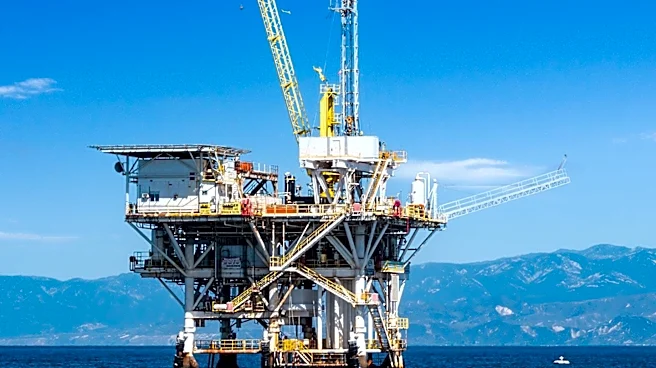
ExxonMobil is actively pursuing new offshore energy opportunities in Trinidad and Tobago, aiming to replicate the successful development model it established in Guyana. The U.S. energy group is expanding its exploration efforts in the region, viewing
Trinidad and Tobago as a geological extension of its significant discoveries in Guyana's Stabroek block. The company plans to decide on its first exploration well drilling location by mid-2027. This strategy comes as Trinidad and Tobago seeks to revitalize its energy sector, which has faced declining crude production and natural gas shortages. ExxonMobil has noted faster approval processes and accelerated preparations for seismic exploration in Trinidad and Tobago compared to typical timelines.
Why It's Important?
This initiative holds significant importance for the U.S. energy industry and global energy markets. ExxonMobil's success in Guyana has established a template for rapid offshore development, and applying this model to Trinidad and Tobago could unlock substantial new hydrocarbon resources. For the U.S., this could contribute to a more diversified global energy supply, potentially influencing international oil and gas prices and reducing reliance on less stable regions. For Trinidad and Tobago, a major discovery could revitalize its economy, boost its natural gas and LNG export capabilities, and enhance its role as a regional energy hub. The accelerated regulatory processes observed in Trinidad and Tobago could also set a precedent for other nations seeking to attract major energy investments, highlighting the value of efficient governance in project development.
What's Next?
ExxonMobil is expected to select its first drilling location in Trinidad and Tobago by mid-2027. If commercially attractive resources are confirmed, the company intends to deploy its rapid development approach, similar to its operations in Guyana. This could involve significant investment in offshore infrastructure and technology. The potential for regional energy integration, including cross-border arrangements with Venezuela for gas supply, suggests a broader strategic development for the southern Caribbean. The success of this exploration phase will determine the scale and pace of future investments and could influence other international energy companies to explore opportunities in the region, further solidifying the Caribbean's role in global energy supply.
Beyond the Headlines
Beyond the immediate economic and energy supply implications, ExxonMobil's strategy in Trinidad and Tobago highlights a broader shift in how major energy companies approach global resource development. The replication of successful operating models, coupled with the application of advanced technologies like AI for exploration and development, signifies a more standardized and efficient approach to large-scale projects. This could lead to a reduction in development timelines and costs, making previously marginal fields economically viable. The emphasis on regulatory efficiency also underscores the increasing importance of stable and predictable governance for attracting foreign direct investment in the energy sector. This approach could transform how energy projects are conceived and executed worldwide, with a focus on transferable expertise and technological leverage.