







What's Happening?
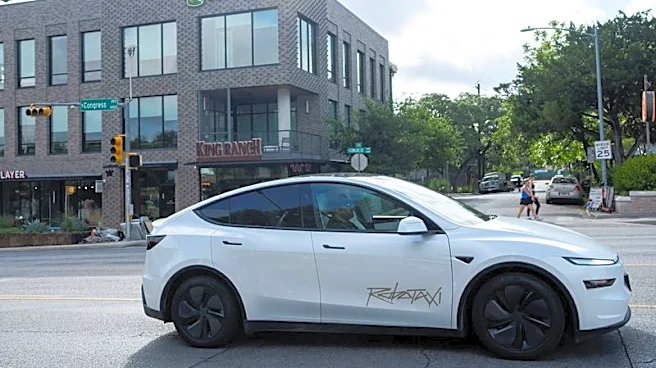
Mobileye has announced plans to expand its operations beyond supplying self-driving technology to include full ownership of an autonomous ride-hailing business. This new initiative is set to launch in a major U.S. city in 2027. Mobileye aims to integrate
its autonomous driving capabilities with fleet operations, rider services, and mobility management into a single offering. The company plans to deploy an initial fleet of about 100 vehicles, with the goal of scaling up to approximately 17,000 vehicles over the next five years. This move is part of Mobileye's strategy to combine its existing business model with direct robotaxi operations, allowing the company to accelerate deployment and gain operational insights.
Why It's Important?
The launch of Mobileye's vertically integrated robotaxi business represents a significant shift in the autonomous vehicle industry. By moving into direct operations, Mobileye can showcase its technology's capabilities and potentially accelerate the adoption of autonomous mobility solutions. This initiative could impact the U.S. transportation sector by introducing a new model for ride-hailing services, potentially reducing reliance on human drivers and altering urban mobility patterns. The success of this venture could influence other companies in the industry to adopt similar strategies, thereby increasing competition and innovation in the autonomous vehicle market.
What's Next?
Mobileye plans to begin deploying its initial fleet in 2027, with a phased rollout throughout the year to validate its operational model under fully driverless conditions. The company will work with AV-ready vehicle platform manufacturers, fleet operators, and technology suppliers to build a comprehensive ecosystem for its robotaxi services. As the deployment progresses, Mobileye will likely seek to expand its operations to additional cities and refine its business model based on operational learnings. Stakeholders in the transportation and technology sectors will be closely monitoring the rollout for its implications on the future of urban mobility.