






What's Happening?
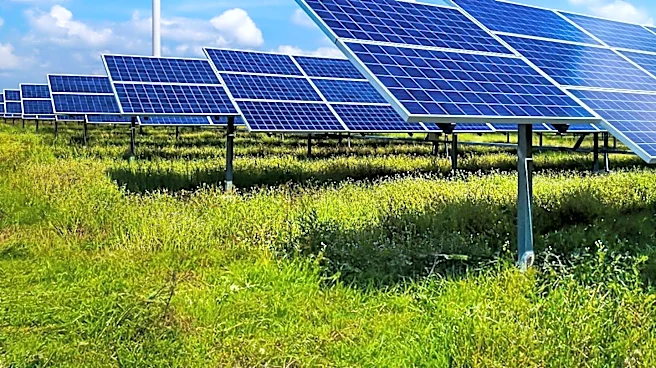
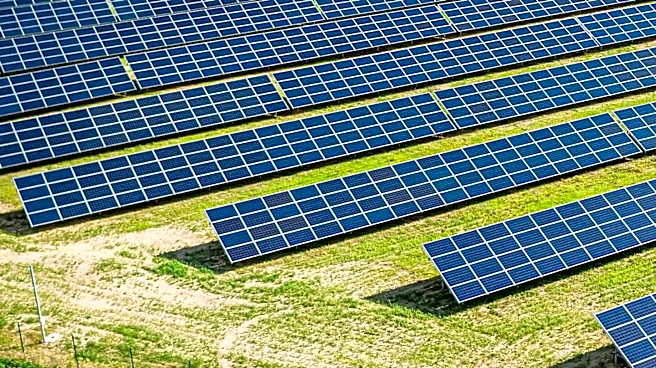
Inox Solar Americas has announced a significant agreement to supply 767 megawatts (MW) of PV modules to a leading U.S. solar energy developer. This deal involves providing modules for three utility-scale solar projects located in North Carolina and Texas,
with individual capacities of approximately 71 MW, 102 MW, and 594 MW. Deliveries of these PV modules are slated to commence in 2027. The agreement underscores Inox Solar Americas' commitment to U.S. manufacturing and its strategy to comply with evolving U.S. trade and energy policy requirements, including Prohibited Foreign Entity (PFE), Foreign Entity of Concern (FEOC), domestic content, and supply-chain traceability. The company plans to utilize its Vega Series™ bifacial PV modules, which incorporate advanced Galaxion™ N-Type PV cells, engineered for high power output and durability in utility-scale applications while supporting high levels of U.S. domestic content.
Why It's Important?
This supply agreement is crucial for strengthening the U.S. domestic solar supply chain and reducing reliance on foreign manufacturers, aligning with federal initiatives to bolster critical product supply chains. By emphasizing U.S. manufacturing and high domestic content, Inox Solar Americas is directly contributing to the nation's energy independence and economic security. The deal also demonstrates the commercial viability and bankability of domestically produced PV modules, which is vital for attracting further investment in U.S. solar energy infrastructure. For the U.S. solar industry, this means greater stability, reduced risk from geopolitical tensions, and enhanced compliance with regulatory requirements. It also supports job creation within the manufacturing sector and fosters technological advancements in renewable energy, positioning the U.S. as a leader in sustainable energy solutions.
What's Next?
Following this agreement, Inox Solar Americas will proceed with the manufacturing and scheduled delivery of the PV modules starting in 2027. The successful execution of these projects will likely reinforce the company's position as a key supplier in the U.S. utility-scale solar market and could lead to further contracts. The company will continue to focus on enhancing supplier qualification, increasing domestic sourcing, and improving supply-chain transparency to meet future compliance requirements and strengthen resilience. This development may also encourage other solar energy developers to prioritize domestic content and resilient supply chains, potentially driving more investment into U.S.-based solar manufacturing facilities and fostering a more robust domestic solar industry.
Beyond the Headlines
The broader implication of this agreement extends to the strategic imperative of de-risking critical supply chains, particularly in sectors vital for national security and economic stability. The emphasis on domestic content and compliance with regulations like PFE and FEOC reflects a growing national awareness of the vulnerabilities associated with global dependencies. This shift towards localized production not only ensures a more reliable supply of essential components but also promotes innovation and technological self-sufficiency. Furthermore, it highlights a potential long-term trend where environmental sustainability goals are increasingly intertwined with national security and economic policy, driving a more integrated approach to industrial development and supply chain management.