








What's Happening?
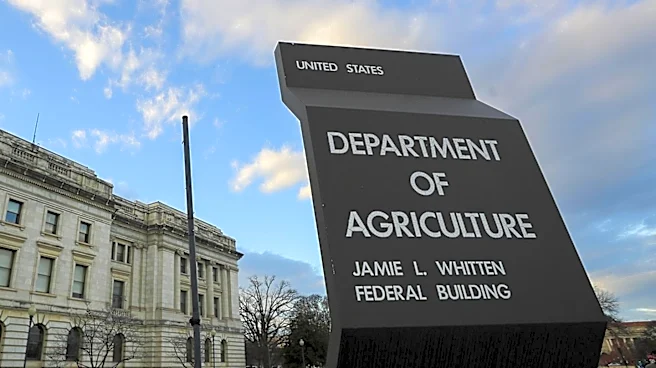
Agriculture Secretary Brooke Rollins announced a $500 million initiative called the Fertilizer Investment & Expansion for Long-Term Domestic Supply (FIELDS) program. This program, administered through USDA Rural Development, aims to expand domestic fertilizer
manufacturing and strengthen the U.S. fertilizer supply chain. The funding will come from the Commodity Credit Corporation, a line of credit at the Treasury. The initiative is part of a broader effort to reduce reliance on foreign suppliers and improve affordability for American farmers. The announcement was made at a news conference attended by Environmental Protection Agency Administrator Lee Zeldin and Agriculture Deputy Secretary Stephen Vaden. The program is expected to support the construction and expansion of domestic fertilizer production facilities.
Why It's Important?
The FIELDS program is significant as it addresses the long-standing issue of U.S. farmers' reliance on foreign fertilizer suppliers, which has been a point of vulnerability in the agricultural supply chain. By boosting domestic production, the program aims to stabilize prices and ensure a more reliable supply of fertilizers, which are critical for crop production. This initiative could lead to increased competition in the fertilizer market, potentially lowering costs for farmers. Additionally, it aligns with broader economic goals of enhancing domestic manufacturing capabilities and reducing dependency on imports, which can be subject to geopolitical tensions and trade disruptions.
What's Next?
Applications for the FIELDS program must be submitted electronically by August 15. The program requires applicants to provide financial documents proving project viability and mandates 50% matching funds from the private sector. While the $500 million investment is relatively small compared to the capital needed for new fertilizer plants, it is expected to provide a necessary boost to the industry. The program's success will depend on the ability of private sector partners to leverage this funding effectively. The Democratic National Committee has criticized the program's scale, suggesting it is insufficient compared to previous initiatives.