







What's Happening?
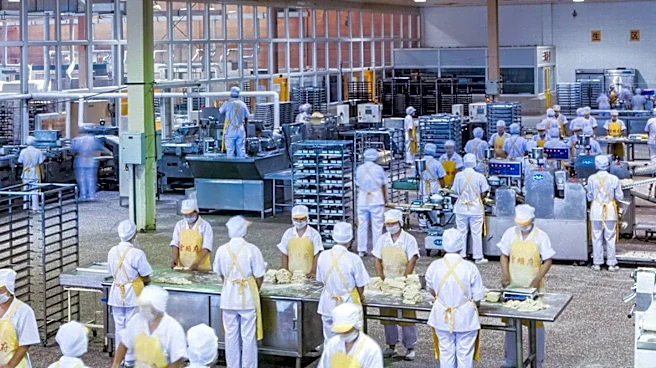
U.S. manufacturing has reached a record value of $2.91 trillion in 2024, driven by significant investments and a strong economic environment. However, the industry faces a critical workforce shortage, with a projected need for 3.8 million additional workers
by 2033. The shortage is exacerbated by retiring workers and the demand for new growth, particularly in sectors like semiconductors and electric vehicles. The American Manufacturing Revitalization Exchange Program Act, H.R. 9097, aims to address this gap by sending American workers abroad for advanced training, which they can bring back to the U.S.
Why It's Important?
The growth in U.S. manufacturing is crucial for the economy, national security, and global competitiveness. However, the workforce shortage poses a significant threat to sustaining this growth. The inability to fill these positions could limit the industry's expansion and affect the U.S.'s ability to capitalize on foreign investments and technological advancements. The proposed legislation could help bridge the skills gap by equipping American workers with the necessary expertise to operate advanced manufacturing facilities.
What's Next?
The success of U.S. manufacturing will depend on effectively addressing the workforce shortage. The passage and implementation of H.R. 9097 could play a pivotal role in training the next generation of manufacturing workers. Additionally, continued investment in education and vocational training programs will be essential to meet the industry's long-term needs. The industry must also focus on attracting and retaining talent to ensure a sustainable workforce pipeline.