


What's Happening?
NBA franchises are known for honoring their legendary players by retiring their jersey numbers, a tradition that prevents future players from using those specific numbers. This practice serves as a way to immortalize players and narrate the history of
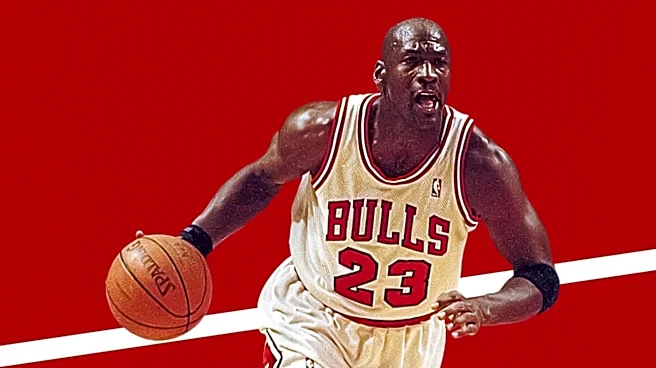
a franchise. Examples include Larry Bird's number 33 in Boston, Magic Johnson's number 32 in Los Angeles, and Michael Jordan's number 23 in Chicago. The criteria for retiring a jersey vary among teams, with some focusing on championship contributions, while others prioritize longevity, fan attachment, or a player's role in shaping the team's identity. Notably, Kobe Bryant is the only player to have two different numbers (8 and 24) retired by the same franchise, the Los Angeles Lakers, reflecting his distinct career phases. Michael Jordan's number 23 was also retired by the Miami Heat, despite him never playing for the team, as a tribute to his overall impact on basketball. Furthermore, the NBA and the players' union collectively retired Bill Russell's number 6 across all thirty franchises in 2022, a first in league history, recognizing his unparalleled success and his significant contributions as a civil rights activist.
Why It's Important?
The tradition of retiring jersey numbers in the NBA is important because it symbolizes the profound impact individual players have on their teams and the sport as a whole. It creates a lasting legacy, ensuring that the contributions of these athletes are remembered and celebrated for generations. This practice also fosters a deep connection between fans and their team's history, as the suspended jerseys serve as tangible reminders of past glories and iconic figures. The unique cases, such as Kobe Bryant having two numbers retired, highlight the extraordinary careers and dual identities some players forge. Michael Jordan's jersey retirement by a team he never played for underscores his universal influence on basketball, transcending team loyalties. The league-wide retirement of Bill Russell's number 6 is particularly significant, as it not only honors his unprecedented eleven championships but also acknowledges his crucial role as a civil rights pioneer, elevating the tradition beyond mere athletic achievement to recognize broader societal impact. This collective honor sets a precedent for recognizing figures whose influence extends beyond the court.
What's Next?
The NBA's tradition of retiring jerseys is expected to continue, with future legends likely to receive similar honors. The recent league-wide retirement of Bill Russell's number 6 suggests a potential precedent for recognizing players whose impact extends beyond their on-court performance, particularly those who have made significant social or cultural contributions. This could lead to discussions about other figures who might warrant such universal recognition. Teams will continue to evaluate their own criteria for jersey retirements, balancing on-court achievements with other factors like fan loyalty and a player's role in shaping franchise identity. The ongoing evolution of the game and the emergence of new superstars will inevitably lead to more jerseys being hoisted to the rafters, each telling a unique story of athletic excellence and historical significance. The debate over which players deserve such an honor, and under what circumstances, will remain a recurring theme in NBA discourse.
Beyond the Headlines
Beyond the immediate recognition of athletic achievement, the practice of retiring jersey numbers in the NBA carries deeper cultural and historical significance. It transforms a simple number into a powerful symbol of identity, memory, and collective narrative for a franchise. The act of retiring a jersey is not just about preventing its reuse; it's about weaving a player's story into the fabric of the team's legacy, creating a visual timeline of its most impactful figures. The case of Pete Maravich, whose number 7 was retired by the New Orleans Pelicans despite him never playing for them (due to the franchise's historical lineage), illustrates how these honors can transcend direct player-team relationships to celebrate regional basketball history. Furthermore, the Lakers' decision to hang a microphone in honor of commentator Chick Hearn demonstrates that these tributes extend beyond players to other influential figures who have shaped a team's identity. This tradition highlights how sports franchises act as custodians of history, using symbolic gestures to preserve and communicate their heritage to new generations of fans.