





What's Happening?
Nvidia has informed its contract manufacturers that prices for AI servers, specifically those built around its Vera Rubin and Grace Blackwell platforms, will increase by more than 15% for shipments beginning in early 2027. This price hike, which could
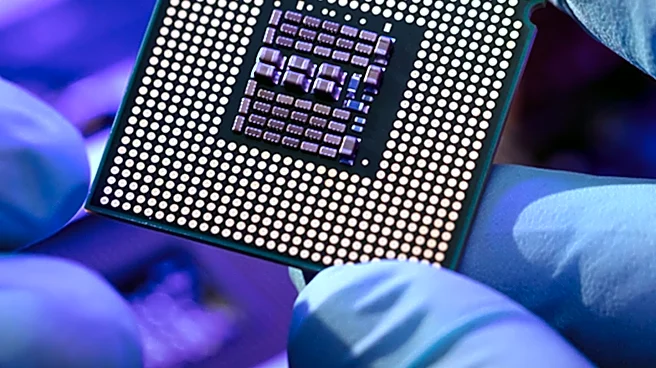
reach up to 17% depending on memory configuration, is primarily driven by a significant surge in the cost of memory components, including DRAM, NAND, and HBM. Memory chips now constitute approximately 25% of the cost of a high-end AI server rack, a substantial increase from two years ago. This shift means that even with Nvidia's high gross margins, the company can no longer absorb the escalating memory costs. The price adjustments will affect major hyperscalers like Microsoft, Google, Oracle, Amazon, and Meta, as they are downstream customers of these contract manufacturers.
Why It's Important?
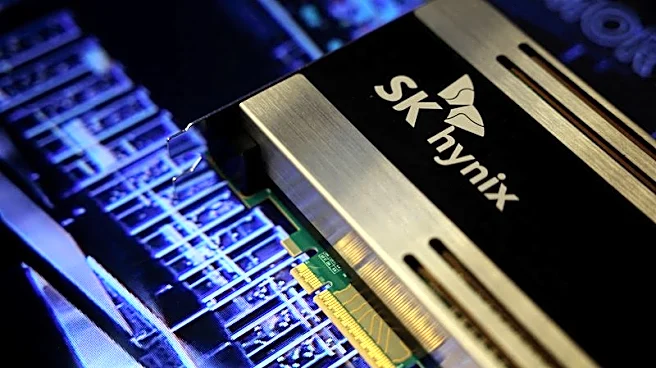
This price increase signals a significant shift in the economics of AI infrastructure development, directly impacting the operational costs for major cloud providers and enterprises investing heavily in AI. Higher hardware costs will likely translate into increased cloud pricing and enterprise AI contract expenses, eventually affecting a broad range of digital services and consumer electronics. The situation underscores the critical role of memory suppliers—Samsung Electronics, SK Hynix, and Micron Technology—who now wield considerable pricing power over the entire AI hardware stack. This development could also accelerate the trend of hyperscalers developing their own custom AI accelerators, such as Google's TPUs and Amazon's Trainium chips, to reduce their dependence on Nvidia and mitigate the impact of rising component costs. The long-term nature of the memory shortage, with new fabrication capacity not expected until 2029 or 2030, suggests sustained pressure on AI hardware pricing.
What's Next?
The price increase will take effect for server shipments starting in early 2027, coinciding with the initial large orders for Nvidia's Vera Rubin platform. Hyperscalers are expected to reflect these higher costs in their capital expenditure guidance over the next two earnings cycles. Analysts will closely monitor whether memory price projections materialize as expected and if major cloud buyers publicly push back against the price increases. Nvidia is also reportedly securing multi-year purchase agreements with memory suppliers to ensure HBM allocation for future platforms. The memory shortage is projected to last at least through the first half of 2027, indicating that further price adjustments from Nvidia are possible. This situation is also expected to drive continued price increases in consumer electronics that rely on DRAM and NAND.
Beyond the Headlines
The memory shortage and subsequent price hikes highlight a fundamental vulnerability in the global AI supply chain, where a few key memory manufacturers hold significant leverage. This situation could lead to a re-evaluation of supply chain resilience and diversification strategies within the tech industry. Ethically, the increased costs could exacerbate the digital divide, making advanced AI capabilities more expensive and potentially less accessible to smaller businesses and developing regions. Culturally, the continuous rise in hardware costs for AI infrastructure could influence the pace and direction of AI innovation, potentially favoring well-capitalized entities. The dynamic also underscores the complex interplay between hardware manufacturing, geopolitical factors, and technological advancement, revealing how a single component shortage can ripple through an entire industry and beyond.