






What's Happening?
A new analysis by CIFOR-ICRAF, conducted by Christopher Martius and Nathanaël Pingault, indicates that while food systems account for a substantial share of carbon market activity, several major sources of food system emissions remain underrepresented.
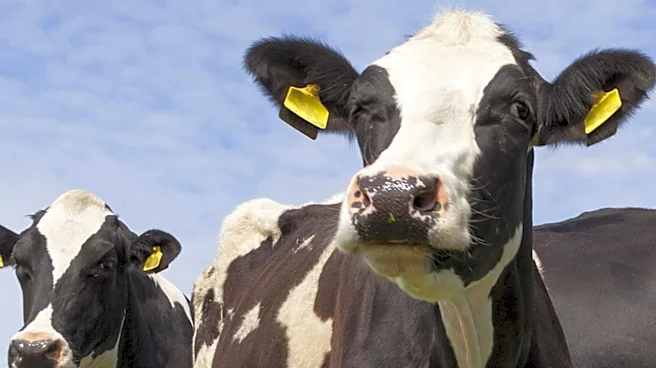
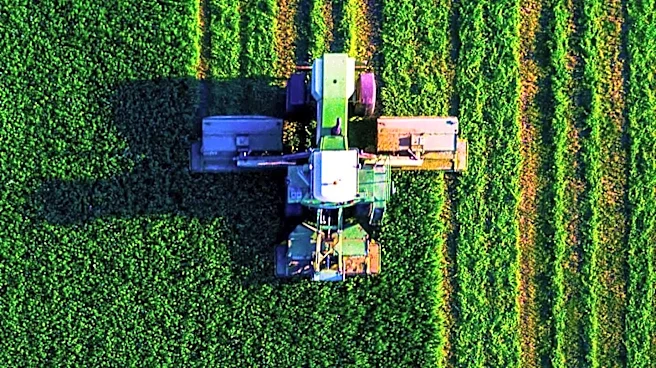
The study, which examined 9,254 projects issuing credits through UNFCCC mechanisms or independent standards, found that nearly half (48.6%) of all food system-related credits come from refrigeration and REDD+ projects. In contrast, agriculture, despite its central role in the food system and significant emissions contribution, accounts for only 2.8% of credits. Major farm-level emissions, such as methane from livestock digestion, manure management, and rice cultivation, are particularly underrepresented. The paper suggests that the current rules for carbon markets, designed for large, uniform projects, make participation expensive and complicated for smaller agricultural activities.
Why It's Important?
This analysis is highly important for the U.S. as it highlights a significant gap in current carbon market mechanisms, which could impede effective climate action and impact agricultural policy. The U.S. agricultural sector is a major contributor to greenhouse gas emissions, and the underrepresentation of farm-level emissions in carbon markets means that a substantial opportunity for mitigation is being missed. This could affect U.S. efforts to meet climate targets and could also disadvantage U.S. farmers who might otherwise benefit from participating in carbon credit programs. The findings suggest a need for policy adjustments and innovative market designs that better accommodate the unique characteristics of agricultural emissions and smallholder farming, potentially influencing future U.S. climate legislation, agricultural subsidies, and carbon market regulations. Addressing these gaps could unlock new revenue streams for farmers and accelerate the adoption of sustainable practices.
What's Next?
The paper advocates for methods better suited to agricultural conditions, such as grouping smaller activities under a single program to share costs of registration, monitoring, and verification. It also calls for more consistent accounting rules and greater compatibility between different registries and standards in carbon markets. Future developments will likely involve efforts to reform carbon market structures to be more inclusive of agricultural emissions. This could lead to the creation of new financial instruments or policy incentives designed to encourage farmers to adopt emission-reducing practices. Stakeholders, including policymakers, agricultural organizations, and environmental groups, will likely engage in discussions to develop more effective and equitable carbon market mechanisms that accurately reflect and incentivize emissions reductions within the food system. The debate will also continue on whether carbon markets are the most effective tool for all overlooked emission sources, or if regulation and public investment might be more appropriate in some cases.
Beyond the Headlines
The disparity in carbon market representation for agricultural emissions points to a deeper systemic challenge in valuing and incentivizing environmental stewardship within complex sectors. The current market design, favoring large-scale, easily quantifiable projects, inadvertently overlooks the cumulative impact of numerous smaller, diverse agricultural activities. This not only hinders climate mitigation efforts but also raises questions about equity and access for smallholder farmers, who often bear the brunt of climate change impacts. The ethical dimension of carbon markets, particularly regarding the credibility of credits and the potential for greenwashing, also comes to the forefront. Ensuring that new mechanisms genuinely lead to additional emissions reductions, without displacing communities or ecosystems, will be crucial. This analysis prompts a re-evaluation of how economic incentives can be aligned with environmental goals in a way that is both effective and socially just, potentially leading to a more integrated approach to climate and agricultural policy.