






What's Happening?
A memorable scene from Paolo Sorrentino's Oscar-winning 2013 film 'La Grande Bellezza' takes place in the Baths of Caracalla, where the character Jep encounters a magician and a giraffe. This cinematic portrayal underscores the historical and cultural
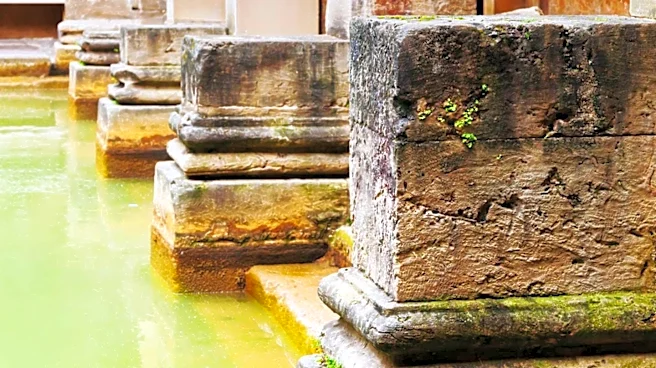
significance of the ancient Roman archaeological site. The Baths of Caracalla, constructed between 212 C.E. and 216 C.E., were the second-largest bathing complex in ancient Rome, serving as a social hub with gyms, changing rooms, massage rooms, and libraries. Recently, in 2024, a reflecting pool inspired by the ancient natatio was inaugurated in the gardens, reintroducing water to the baths for the first time in 1,800 years. The site also currently hosts an exhibition of photographs by Frank Horvat, on view until January 10, 2027.
Why It's Important?
The cinematic representation of the Baths of Caracalla in 'La Grande Bellezza' brings renewed attention to ancient Roman history and its enduring influence on modern culture. For the U.S., this highlights the global interconnectedness of cultural heritage and the role of film in preserving and promoting historical sites. The film's popularity can inspire tourism and academic interest in classical studies, potentially impacting educational programs and cultural exchange initiatives. The ongoing preservation efforts, such as the reintroduction of water to the reflecting pool, demonstrate a commitment to maintaining these historical treasures, which can serve as models for similar conservation projects globally, including those related to U.S. historical landmarks.
What's Next?
The Baths of Caracalla continue to be an active archaeological site and cultural venue. The Frank Horvat photography exhibition will remain open until January 10, 2027, attracting visitors and art enthusiasts. In the summer, the site typically hosts operas and ballets by the Teatro dell’Opera di Roma, although performances were temporarily moved to the Circus Maximus due to ongoing restoration work. These events ensure the Baths remain a vibrant cultural destination. The continued efforts to restore and enhance the site, such as the new reflecting pool, suggest a long-term commitment to its preservation and public engagement, potentially inspiring future collaborations with international cultural institutions.
Beyond the Headlines
The use of historical sites like the Baths of Caracalla in contemporary cinema, as seen in 'La Grande Bellezza,' illustrates the powerful dialogue between past and present. This artistic engagement not only entertains but also educates, offering audiences a window into ancient civilizations and their architectural marvels. The film's surreal scene within the baths evokes a sense of timelessness and wonder, prompting reflection on the continuity of human experience and the enduring legacy of art and culture. This interplay between historical authenticity and artistic interpretation enriches our understanding of heritage, encouraging a deeper appreciation for the foundations of Western civilization and their relevance in a modern context.