







What's Happening?
Copenhagen Fashion Week 2026 has concluded, solidifying its status as the fifth major fashion week globally. This year's event emphasized sustainability and diversity, with all participating brands required to meet specific criteria in these areas. The
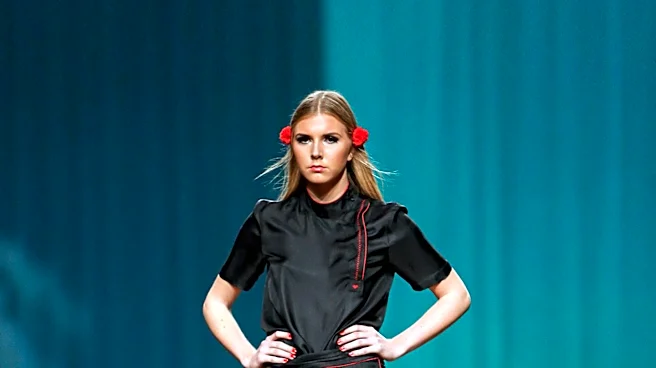
fashion week showcased a blend of local and international designers, highlighting trends such as tapestry, capes, and ruching. The event also featured a mix of emerging talent and established labels, with a focus on practical yet polished fashion. The emphasis on sustainability extended beyond environmental concerns to include diversity and inclusion on the runways.
Why It's Important?
Copenhagen Fashion Week's focus on sustainability and diversity sets a precedent for other fashion weeks worldwide. By mandating these criteria, the event encourages brands to adopt more responsible practices, potentially influencing the broader fashion industry. This approach not only addresses environmental concerns but also promotes inclusivity, reflecting a shift towards more ethical fashion. The trends showcased, such as tapestry and capes, may influence upcoming fashion seasons, impacting consumer preferences and retail strategies. The event's success highlights the growing importance of smaller fashion weeks in shaping global fashion narratives.
What's Next?
As Copenhagen Fashion Week continues to grow, it may inspire other fashion events to adopt similar sustainability and diversity standards. The trends highlighted during the event are likely to influence upcoming fashion seasons, with designers and retailers incorporating these styles into their collections. The emphasis on sustainability could lead to increased consumer demand for eco-friendly and inclusive fashion, prompting brands to innovate and adapt. Additionally, the success of Copenhagen Fashion Week may encourage other cities to host similar events, further diversifying the global fashion landscape.