




What's Happening?
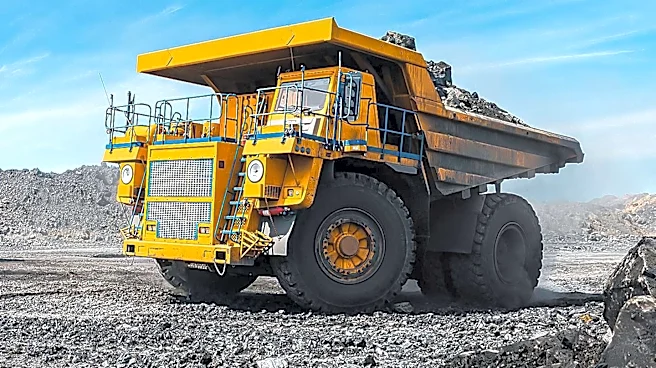
Evy Hambro, Global Head of Thematic and Sector Investing at BlackRock, stated that the metals industry is at the beginning of a significant upswing. This new cycle is fueled by years of underinvestment in mining capacity coinciding with a surge in infrastructure
spending, particularly for data centers and power networks. Hambro, speaking at the FT Metals & Mining Summit 2026, noted that investment in new mining capacity peaked around 2011 and hit bottom in 2016, leading to tight supply. He emphasized that current demand growth is distinct from the 'China cycle' of the early 2000s, as it is driven by a global capital expenditure cycle across various industries. Hyperscalers, which operate large cloud and AI data centers, require substantial amounts of power, making them highly materials-intensive, especially for copper. Hambro believes that the industry has considerable room for growth in both volumes and margins, with opportunities for increased automation and efficiency.
Why It's Important?
This projected upswing in the mining sector has significant implications for U.S. industries and the global economy. Increased demand for critical minerals, driven by AI infrastructure and broader capital expenditure, will impact supply chains for technology, energy, and manufacturing sectors. For U.S. companies involved in technology and renewable energy, securing a stable supply of these materials will be crucial for continued growth and innovation. The potential for sustained high margins in commodities could attract substantial investment, influencing capital allocation strategies for major asset managers like BlackRock. Furthermore, the emphasis on automation and efficiency in mining could lead to technological advancements within the sector, potentially creating new job opportunities and improving operational sustainability. The shift from a China-centric demand model to a more diversified global capital expenditure cycle suggests a more resilient and broad-based demand for commodities, which could stabilize prices and investment over the long term.
What's Next?
Mining companies are expected to focus on strategic capital allocation, potentially divesting non-core assets like desalination plants or railways to reinvest in their primary business and enhance growth. This approach aims to avoid the pitfalls of previous cycles where debt-funded projects led to financial distress. The industry will likely see continued efforts to deploy advanced technologies and automation to improve efficiency and productivity, which could lead to higher margins. Investors are encouraged to adopt a diversified approach, as various 'black swan' scenarios could still impact the sector. Attention is anticipated to return to industrial minerals once geopolitical conflicts ease and supply chain disruptions stabilize. The high cost of new capacity, estimated at $30,000 per ton for copper, suggests that larger companies may have an advantage due to lower capital costs, potentially leading to more mergers and acquisitions in the sector.
Beyond the Headlines
The anticipated mining boom highlights a deeper global shift towards a more materials-intensive economy, driven by technological advancements like AI and the ongoing energy transition. This could lead to increased scrutiny on environmental and social governance (ESG) practices within the mining industry, as the extraction of vast amounts of hard materials will inevitably have ecological footprints. The discussion around divesting non-core assets also points to a trend of specialization within industries, where companies focus on their core competencies while outsourcing or selling ancillary operations. This could reshape the structure of large mining conglomerates. Furthermore, the rapid rotation of capital between asset classes, as noted by Hambro, underscores the increasing volatility and interconnectedness of global financial markets, where geopolitical events can swiftly redirect investment flows, impacting commodity prices and sector performance.