




What's Happening?
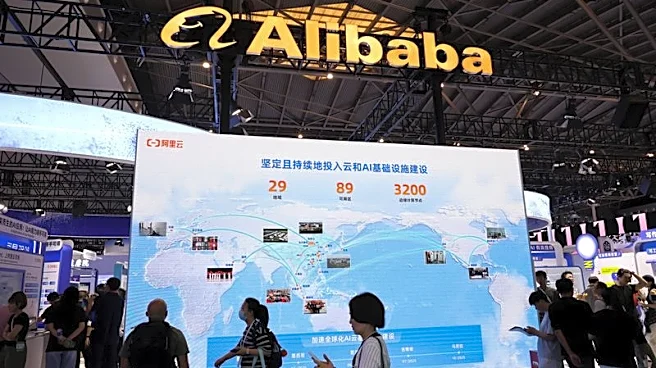
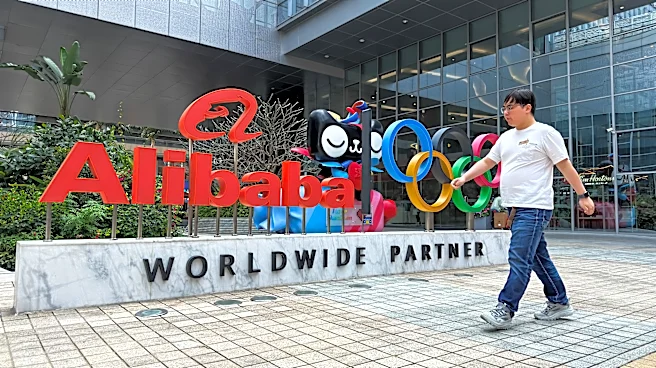
Alibaba has announced plans to spin off its in-house AI chip designer, T-Head, through a Hong Kong listing. The company disclosed this intention on November 10, 2026, with T-Head having privately filed its listing application on September 11, 2026. T-Head, founded
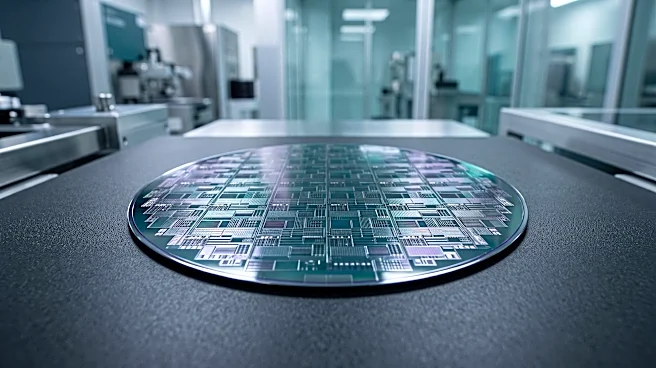
in 2018 and fully owned by Alibaba, designs data center chips for computing in China. While the Hong Kong exchange has confirmed Alibaba may proceed, the listing still requires approval from the exchange’s Listing Committee and a completed filing with the China Securities Regulatory Commission (CSRC). Alibaba has not yet announced a specific date, size, or valuation for the IPO, and there is no assurance the spin-off will occur. Nomura estimates T-Head's value could range from $25 billion to $86 billion.
Why It's Important?
This planned spin-off is a strategic move by Alibaba to secure external capital for its significant AI investments, as the company plans to spend over $53 billion on AI over three years. A public listing for T-Head would provide its own stock to attract and retain engineers and establish a market price for a valuable asset currently embedded within the conglomerate. However, the regulatory hurdles, particularly the need for CSRC sign-off, are significant. Previous reports indicate that other Chinese chip designers, like Baidu's Kunlunxin and YMTC, have faced delays or shelved their IPOs due to tighter scrutiny of tech listings. This suggests that Alibaba's T-Head IPO will be a critical test case for the regulatory environment surrounding Chinese AI chip companies, impacting investor confidence and the future of AI development in China.
What's Next?
Alibaba and T-Head must navigate the complex regulatory landscape, securing approval from both the Hong Kong exchange's Listing Committee and the CSRC. The timing and success of the IPO will largely depend on these regulatory clearances. Investors will be looking for a disclosed offering size and valuation, as well as any updates on the mass production schedule for T-Head's Zhenwu V900 chip, slated for the first quarter of 2027. The performance of Alibaba's stock, which has seen declines, will also be closely watched, as the spin-off is intended to unlock value. The outcome of this IPO could influence other Chinese tech giants considering similar spin-offs for their advanced technology divisions.
Beyond the Headlines
The spin-off of T-Head highlights China's strategic imperative to develop its domestic AI chip capabilities, especially in the context of U.S. export restrictions on advanced chips. By listing T-Head, Alibaba aims to bolster its competitive position against rivals like Nvidia, Huawei, and Cambricon. This move is not just about fundraising; it's about fostering a robust domestic semiconductor industry and reducing reliance on foreign technology. The regulatory scrutiny, however, underscores the Chinese government's desire to maintain control over key strategic industries. The success or failure of T-Head's IPO will offer insights into the delicate balance between encouraging innovation and enforcing regulatory oversight in China's rapidly evolving technology sector, potentially shaping the future of global AI chip development and market dynamics.