








What's Happening?
Tomi Adeyemi, the Nigerian American author of the bestselling fantasy novel 'Children of Blood and Bone,' has publicly stated that she will not watch the film adaptation of her book. Despite co-writing the screenplay, Adeyemi has distanced herself from
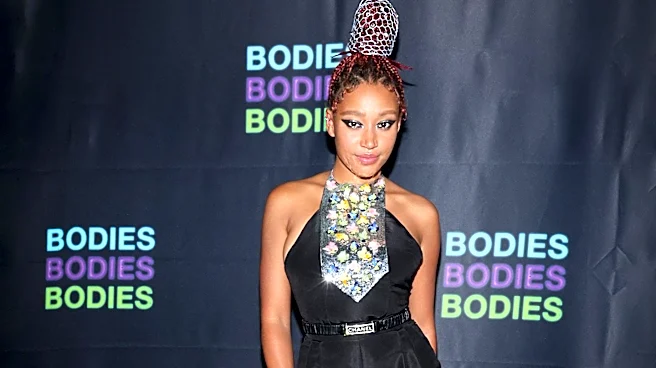
the project due to a personal conflict with actress Amandla Stenberg, who stars in the film. The author shared her decision in a TikTok video, explaining that she has not seen the film and does not intend to. The film, directed by Gina Prince-Bythewood, is set to release in January 2027 and features a star-studded cast including Thuso Mbedu, Tosin Cole, and Regina King. The conflict between Adeyemi and Stenberg reportedly stems from a February 2025 exchange, where Adeyemi severed ties with Stenberg over undisclosed issues. Stenberg, who has faced criticism from fans regarding colorism in casting, addressed the controversy in a now-deleted TikTok video, stating that Adeyemi had initially supported her casting.
Why It's Important?
The decision by Tomi Adeyemi to publicly disassociate from the film adaptation of her own work highlights significant issues within the entertainment industry, particularly around authorial control and representation. Adeyemi's stance may influence public perception and reception of the film, potentially affecting its box office performance. The controversy also underscores ongoing discussions about colorism and representation in Hollywood, as Stenberg's casting has been a point of contention among fans. This situation reflects broader industry challenges in adapting diverse narratives while maintaining the integrity and vision of the original creators. The outcome of this dispute could impact future collaborations between authors and filmmakers, especially in projects involving culturally significant stories.
What's Next?
As the film's release date approaches, it remains to be seen how the public will respond to the adaptation amid the controversy. The production team and cast may need to address the situation to mitigate any negative impact on the film's success. Additionally, the industry may observe this case as a learning opportunity to better handle authorial involvement and representation issues in future projects. Stakeholders, including the film's producers and distributors, might consider strategies to engage with audiences and address their concerns about representation and authenticity. The resolution of this conflict could set a precedent for how similar disputes are managed in the entertainment industry.