



What's Happening?
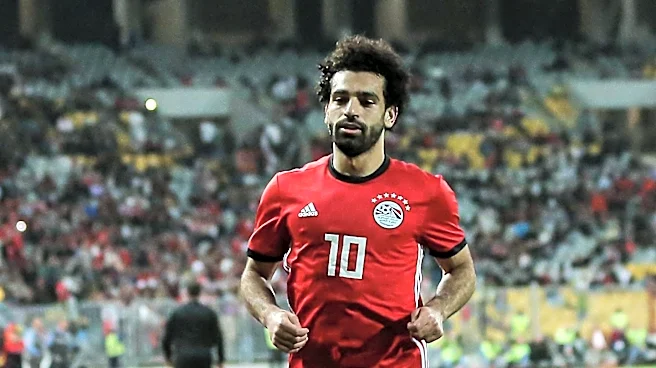
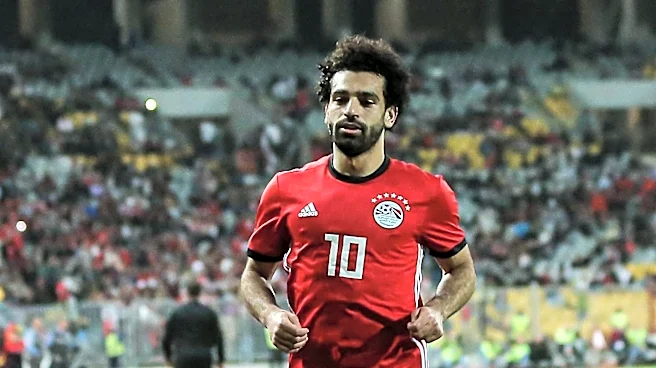
Egyptian footballer Mohamed Salah's international goal count has become a point of contention between the Egyptian Football Association (EFA) and FIFA. The EFA and Salah himself recognize 70 goals, a figure that would make him Egypt's all-time leading
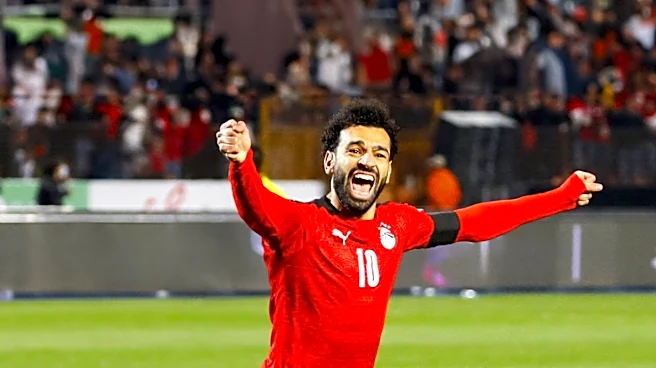
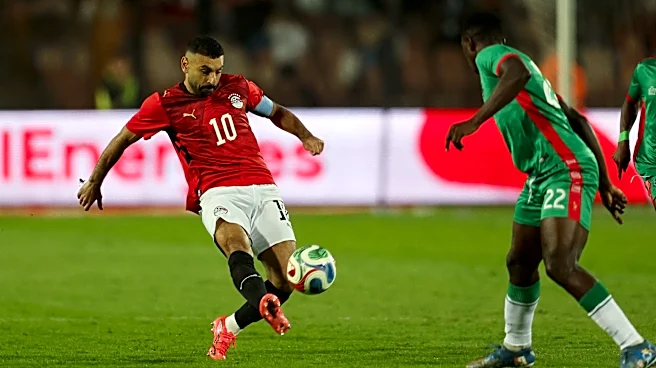
scorer, surpassing Hossam Hassan's 69 goals. This celebration occurred after Salah scored twice in a 5-0 victory against Malawi. However, FIFA's official records list Salah with 68 international goals, maintaining Hossam Hassan as the record holder. The discrepancy stems from a March 2013 friendly match against Swaziland (now Eswatini), where Salah scored two goals in a 10-0 win. FIFA does not count these goals because the match involved a large number of substitutions, failing to meet the criteria for an official full international. This difference in counting has led to widespread debate among fans and media.
Why It's Important?
This debate highlights the complexities and differing standards in sports record-keeping, particularly at the international level. For Mohamed Salah, a prominent global football figure, the official recognition of his achievements carries significant weight for his legacy and national pride. The discrepancy affects how his career is viewed statistically and could influence future endorsements or historical narratives. For the Egyptian national team, the situation creates an awkward dynamic, especially given the recent coaching change and past tensions between Salah and former coach Hossam Hassan. The EFA's decision to celebrate Salah's 70 goals, despite FIFA's differing count, underscores a potential divergence in national and international sporting body perspectives on record validation. This could set a precedent for how other national federations might interpret or challenge international governing body statistics.
What's Next?
Mohamed Salah has an immediate opportunity to potentially resolve the statistical debate in an upcoming match against Malawi. According to FIFA's records, one goal would bring him level with Hossam Hassan, and two goals would officially make him Egypt's all-time leading scorer in FIFA-recognized international matches. The Egyptian team, currently leading Group B in the Africa Cup of Nations qualifiers, is in high spirits following their recent 5-0 win. A victory in the next match would secure their qualification for the 2027 Africa Cup of Nations finals. This ongoing situation will likely keep the spotlight on Salah's performance and the official recognition of his goals, potentially leading to further discussions between the EFA and FIFA regarding record validation criteria.
Beyond the Headlines
The dispute over Mohamed Salah's goal count extends beyond mere statistics, touching upon issues of national identity, sporting authority, and the emotional investment of fans. The EFA's public celebration of Salah's 70 goals, despite FIFA's stance, reflects a desire to honor their national hero and potentially assert a degree of autonomy in how they interpret their own sporting history. This situation could prompt a broader re-evaluation of how friendly matches are categorized and whether their results should contribute to official international records, especially when they involve significant player milestones. The incident also subtly highlights the power dynamics between national football associations and the global governing body, FIFA, in defining and validating sporting achievements. The emotional aspect for fans, who often rally behind their national stars, adds another layer of complexity, as they may prioritize national recognition over strict international guidelines.