
What's Happening?
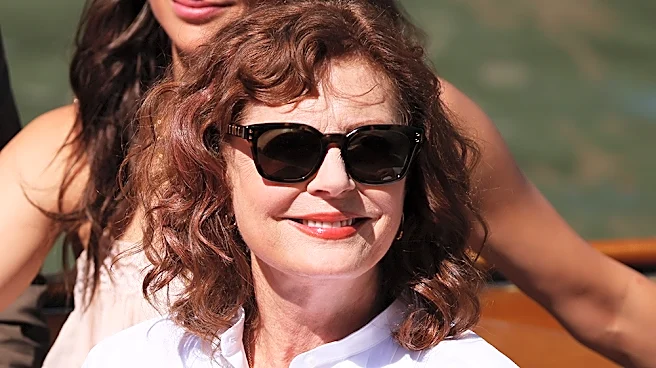
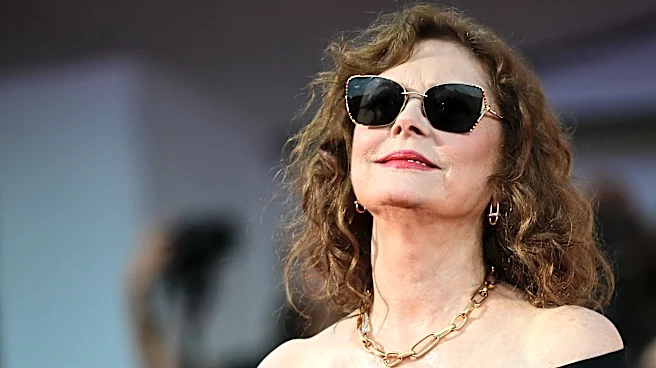
Actress Susan Sarandon has stated that her political beliefs have resulted in her losing movie roles. During a press conference at the Venice Film Festival, Sarandon claimed that agencies are still advising people not to hire her, leading to her being
excluded from film projects. This situation follows backlash she received in 2023 for remarks made at a pro-Palestinian rally in New York City, where she commented that frightened Jews were 'getting a taste of what it is like to be Muslim in this country, so often subjected to violence.' Although she later issued an apology, explaining her phrasing was a 'terrible mistake' and regretting diminishing the reality of Jewish persecution, she was subsequently dropped by her talent agency, UTA, and a production company. Sarandon noted that while she feels the public's understanding of the situation has changed, 'very strongly held positions' within her industry by Zionists continue to affect her career.
Why It's Important?
Sarandon's claims highlight the significant impact of political expression on an individual's career in the entertainment industry, particularly in Hollywood. Her experience underscores the potential for public statements on sensitive geopolitical issues to lead to professional repercussions, including loss of employment and agency representation. This situation reflects a broader tension between freedom of speech and the commercial interests of studios and agencies, as well as the influence of various advocacy groups within the industry. It also brings to light the challenges faced by public figures who take controversial stances, demonstrating how such actions can lead to them being ostracized by powerful industry structures. The incident raises questions about the extent to which artists are expected to align with prevailing political sentiments to maintain their careers.
What's Next?
Sarandon's continued presence in international film festivals, such as the Venice Film Festival where her new Italian film 'The Echo Chamber' premiered, suggests that while she may face challenges in Hollywood, opportunities might still exist in independent or international productions. Her remarks could reignite discussions within the entertainment industry about 'cancel culture' and the professional consequences of political activism. It remains to be seen if her situation will lead to a broader re-evaluation of how the industry handles artists' political views or if it will reinforce existing dynamics where certain viewpoints are deemed unacceptable. Her experience may also encourage other artists to be more cautious or more vocal, depending on their own convictions and risk assessments.
Beyond the Headlines
This situation delves into the complex ethical and cultural dimensions of free speech within a highly visible and influential industry. Sarandon's experience illustrates the power dynamics at play when an artist's personal political beliefs clash with the commercial and political sensitivities of their professional environment. It raises questions about the boundaries of artistic expression and political advocacy, and whether artists should be held to different standards than other public figures. The incident also reflects the ongoing polarization of political discourse and how it permeates various sectors of society, including entertainment. It highlights the potential for long-term career shifts for individuals who become associated with controversial political stances, forcing them to seek alternative avenues for their work and potentially redefining their professional identities.