




What's Happening?
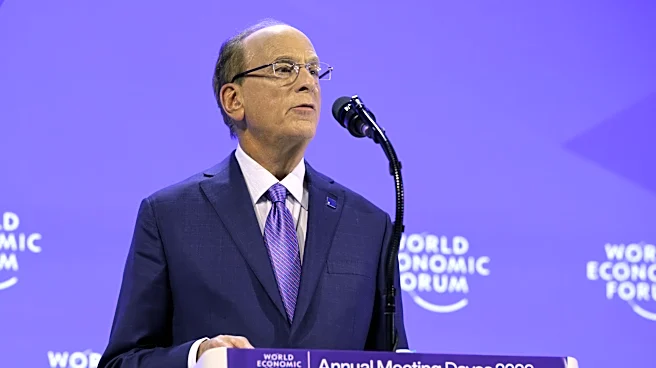
The World Economic Forum (WEF) recently convened a Country Strategy Meeting in Cairo, Egypt. This gathering brought together government and business leaders in the New Capital to discuss Egypt's economic future. The primary focus of the conversations
was on leveraging Egypt's strategic geographical position as a gateway between Africa, Asia, and Europe. The objective is to attract increased investment, particularly in key sectors such as logistics, manufacturing, and clean energy. The meeting aimed to explore how Egypt can capitalize on its unique role to foster economic growth and development through international collaboration and investment.
Why It's Important?
This meeting is significant as it highlights the World Economic Forum's role in facilitating international economic development and investment, even though the WEF is headquartered in Switzerland with offices in New York and San Francisco. For the U.S., such initiatives can indirectly impact global trade dynamics and investment opportunities for American companies looking to expand into emerging markets. Increased stability and economic growth in regions like Egypt, supported by WEF initiatives, can contribute to a more predictable global economic environment, which benefits U.S. foreign policy and business interests. The focus on clean energy and manufacturing also aligns with global sustainability goals and potential U.S. investment in these sectors abroad.
What's Next?
Following the Country Strategy Meeting, the expectation is that the discussions will translate into concrete investment opportunities and policy adjustments within Egypt. The WEF's role often involves fostering ongoing dialogues and partnerships, suggesting that follow-up engagements between international investors and Egyptian stakeholders are likely. The emphasis on logistics, manufacturing, and clean energy indicates potential for new projects and collaborations. While specific timelines are not provided, the momentum generated from such high-level meetings typically leads to further exploration of investment proposals and the implementation of strategies designed to attract foreign capital and expertise.
Beyond the Headlines
The WEF's engagement in Egypt underscores a broader trend of international organizations working to stabilize and develop key geopolitical regions. Beyond direct economic benefits, such meetings can enhance diplomatic ties and foster a more integrated global economy. For the U.S., a stable and economically vibrant Egypt, bolstered by international investment, can serve as a crucial partner in regional security and trade. The focus on clean energy also reflects a global shift towards sustainable development, potentially influencing future U.S. foreign aid and investment strategies in similar emerging economies. The WEF's ability to convene diverse leaders highlights its influence in shaping global economic narratives and investment flows.