






What's Happening?
Phoenix Tailings has announced plans to construct a $375 million rare-earth processing facility at Eastman Business Park in Rochester, New York. This facility is designed to process approximately 18,000 tonnes of rare-earth-bearing feedstock annually,
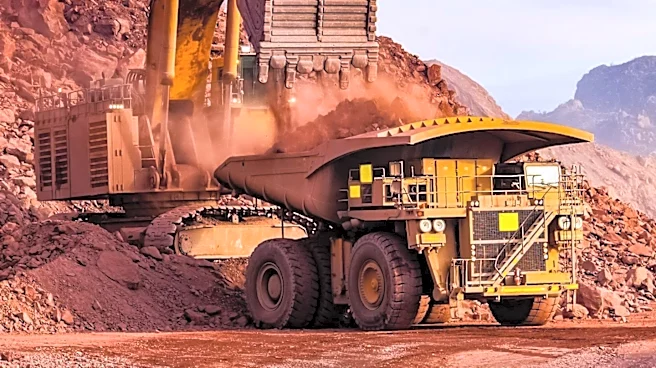
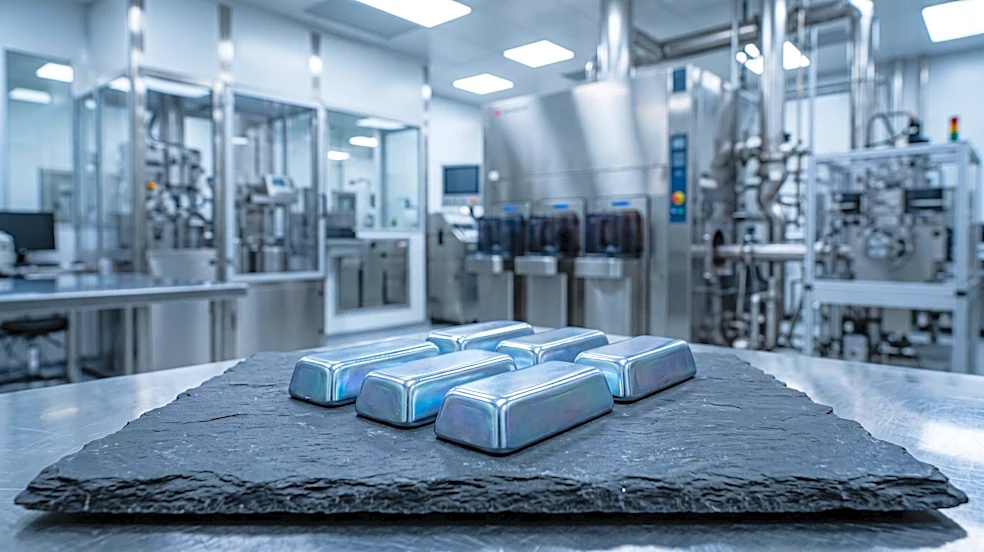
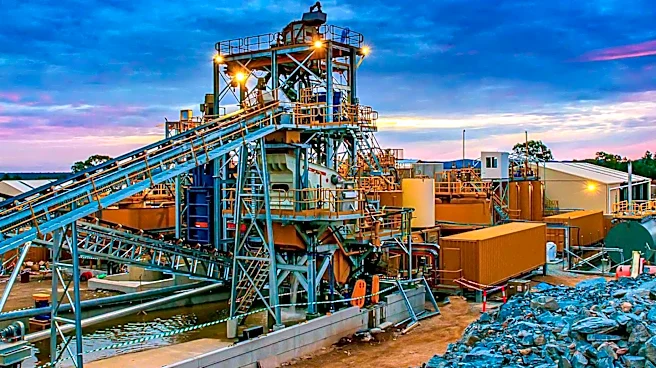
with production slated to begin in 2027 and full operation targeted for 2028. The broader 'Freedom Project' by Phoenix Tailings also includes downstream metallization capabilities. This development is considered significant because rare-earth separation and metal production are identified as critical weaknesses in the U.S. permanent magnet supply chain. The project aims to address the issue that mining rare-earth material domestically is insufficient if it still needs to be shipped overseas for processing. Phoenix Tailings' integrated processing strategy will accommodate both mined materials and recycled feedstocks. The company has an announced $500 million federal loan commitment, though this funding is conditional and not yet fully disbursed.
Why It's Important?
This investment by Phoenix Tailings is a crucial step towards strengthening the U.S. domestic supply chain for rare earth elements and permanent magnets. The current reliance on foreign processing, predominantly from China, poses significant national security and economic risks, as these materials are essential for defense systems, electric vehicles, and various advanced technologies. By establishing a commercial-scale separation and metallization facility, the U.S. aims to reduce its vulnerability to geopolitical disruptions and ensure a more stable supply of critical minerals. This project directly addresses the 'midstream' gap in the U.S. rare earth industry, where raw materials are mined but often lack the domestic capacity for advanced processing into usable forms. The success of such initiatives is vital for achieving true supply-chain independence, moving beyond mere resource extraction to integrated manufacturing capabilities. The conditional nature of the federal loan commitment, however, highlights the ongoing financial challenges and the need for sustained government support to de-risk these strategic investments.
What's Next?
The Phoenix Tailings facility is expected to begin production in 2027, with full operation anticipated by 2028. Key technical and commercial questions remain regarding feedstock flexibility, separation recoveries, product purity, operating costs, and the qualification of the resulting oxides and metals by downstream manufacturers. The project's success will depend on its ability to translate announced processing capacity into actual, customer-qualified output. The conditional $500 million federal loan commitment will need to be fully disbursed, contingent on the company meeting specific milestones. The broader context includes ongoing efforts by the U.S. government to support domestic processing through financing commitments and state-level incentives. The industry will be closely watching for updates on the facility's construction, commissioning, and initial production to assess its impact on the U.S. rare earth supply chain. The ability to produce commercially viable and competitively priced rare earth products will be critical for long-term sustainability.
Beyond the Headlines
The Phoenix Tailings project symbolizes a broader strategic shift in U.S. industrial policy aimed at re-shoring critical manufacturing capabilities. Beyond the immediate economic benefits of job creation and investment, this initiative is a direct response to geopolitical competition and the recognition that control over critical mineral supply chains is a matter of national sovereignty. The emphasis on integrated processing, from separation to metallization, reflects a deeper understanding that merely mining raw materials is insufficient for true independence. This project also highlights the complex interplay between government funding, private enterprise, and technological innovation required to build entirely new industrial ecosystems. The long-term success of such ventures will not only depend on technical feasibility and financial backing but also on the ability to cultivate a skilled workforce, secure consistent raw material inputs, and establish reliable customer off-take agreements. The ethical implications of resource extraction and processing, including environmental impact and community engagement, will also be crucial considerations as these projects advance.