
What's Happening?
The Hobbiton Movie Set, originally constructed for Peter Jackson's 'The Lord of the Rings' and 'The Hobbit' trilogies, has transformed from a temporary film location into a permanent tourist destination
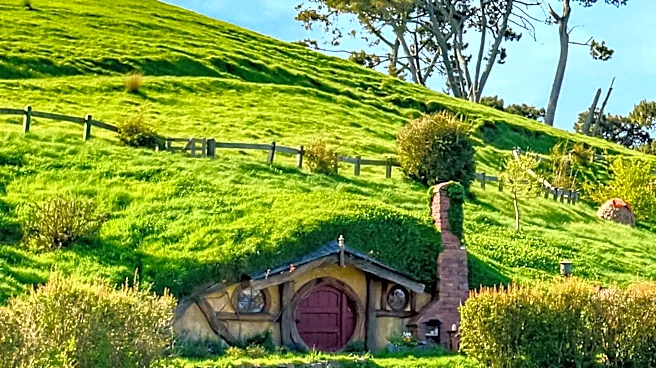
in New Zealand. Located on the Alexander family's 1,250-acre sheep farm near Matamata, the set was initially discovered during an aerial search in 1998 due to its resemblance to J.R.R. Tolkien's description of the Shire. The first iteration of the set, built in 1999 with temporary materials, was largely dismantled after 'The Lord of the Rings' filming. However, when Jackson returned in 2009 for 'The Hobbit' trilogy, the set was rebuilt using permanent materials, ensuring its longevity. Today, the site features 44 hobbit holes, gardens, a mill, a double-arched bridge, and the Green Dragon Inn, which opened to visitors in 2012. Guided tours began in 2002, and the location has since become a significant attraction, welcoming its 500,000th guest in 2013, while the Alexander family farm continues its sheep and beef cattle operations around the set.
Why It's Important?
The transformation of the Hobbiton Movie Set into a permanent attraction highlights the enduring cultural and economic impact of major film franchises. For New Zealand, it represents a significant boost to its tourism industry, drawing international visitors and generating revenue. This development showcases how creative works, particularly those with a strong global following like Peter Jackson's adaptations of Tolkien's novels, can create lasting economic benefits beyond their initial release. It also demonstrates a successful model for repurposing film sets, turning temporary structures into sustainable tourist destinations. The continued operation of the Alexander family farm alongside the tourist attraction illustrates a unique integration of agriculture and entertainment, providing a stable income stream for the landowners while preserving the authentic rural setting that made the location ideal for filming. This blend of cultural heritage and economic enterprise offers a blueprint for other regions looking to capitalize on their cinematic connections.
What's Next?
The Hobbiton Movie Set is expected to continue operating as a major tourist attraction, with ongoing efforts to maintain and enhance the visitor experience. As the site has already demonstrated its capacity to draw hundreds of thousands of visitors, future developments might include expanding facilities or introducing new themed experiences to keep the attraction fresh and appealing. The integration of the Green Dragon Inn and other detailed elements suggests a commitment to providing an immersive experience, which could lead to further expansions of the 'Shire' environment. The success of Hobbiton could also inspire other film locations globally to consider similar long-term strategies for their sets, potentially fostering a new niche in cultural tourism. The Alexander family will likely continue to balance their farming operations with the demands of the tourist site, ensuring the preservation of the unique landscape that attracted Peter Jackson's team in the first place.
Beyond the Headlines
The enduring popularity of the Hobbiton Movie Set reflects a broader cultural phenomenon: the desire for immersive experiences that bridge the gap between fictional worlds and reality. This attraction taps into the deep emotional connection fans have with 'The Lord of the Rings' and 'The Hobbit' sagas, offering a tangible link to a beloved fantasy realm. It also raises questions about the preservation of temporary artistic creations and their potential for long-term cultural and economic value. The decision to rebuild the set with permanent materials for 'The Hobbit' trilogy, rather than dismantling it entirely, proved to be a prescient move, transforming a fleeting film location into a lasting landmark. This case study underscores the power of storytelling to create not just narratives, but also physical spaces that continue to inspire and engage audiences long after the credits roll, blurring the lines between art, commerce, and cultural heritage.