


What's Happening?
A Home Assistant user has transformed an old tablet into an AI-powered virtual pet, dubbed 'Pet Face,' designed to add personality and interactive elements to smart home automation. This open-source project integrates with Home Assistant to provide a visual
and auditory interface that reacts to household events and user interactions. The 'Pet Face' features 15 expressions, voice conversation with an on-device wake word, and emotion detection from speech. It can respond to events like someone entering a room, a doorbell ringing, or changes in weather, and can also control smart devices through voice commands. The system uses a dedicated 'Pet' pipeline with a Large Language Model (LLM) agent, such as Claude Haiku, to give it a distinct personality and generate short, spoken answers. The project emphasizes local processing for simple commands and offers privacy features, with the camera only activating upon user request.
Why It's Important?
This development highlights a growing trend in smart home technology towards more personalized and emotionally engaging user experiences, moving beyond simple command-and-control systems. By giving AI assistants a 'personality' and visual representation, it could increase user adoption and comfort with smart home devices, particularly for those who find traditional voice assistants 'soulless.' The open-source nature of the project fosters innovation within the Home Assistant community, allowing other users to adapt and expand upon the concept. This could lead to a new wave of creative applications for existing hardware, reducing electronic waste by repurposing old tablets. Furthermore, the emphasis on local processing for many functions addresses privacy concerns, a significant barrier for many consumers considering smart home integration, by minimizing data transmission to external servers.
What's Next?
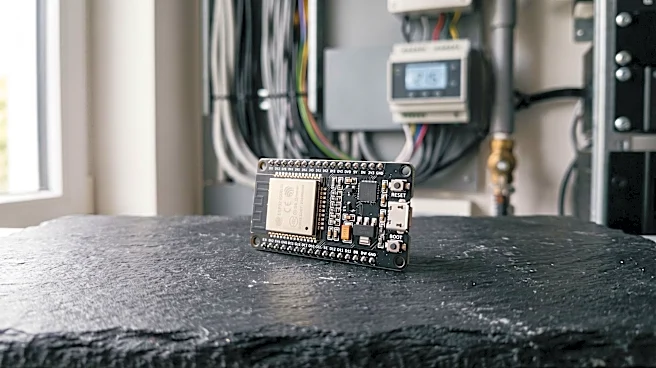
The developer plans to continue refining the 'Pet Face' project, with potential future enhancements including new expressions, reactions, and possibly a port to round-screen ESP32 boards. The open-source community is encouraged to provide feedback and contribute to its development, suggesting new features or stability improvements. This collaborative approach could lead to a more robust and feature-rich virtual pet system. As AI and LLMs continue to advance, the 'Pet Face' could gain more sophisticated conversational abilities and a deeper understanding of complex household dynamics. The project's success may also inspire other developers to create similar personalized AI interfaces for various smart home platforms, potentially leading to a broader market for 'companion' AI devices.
Beyond the Headlines
The 'Pet Face' project touches upon deeper implications regarding the human-technology relationship and the evolving role of AI in daily life. By imbuing a smart home interface with personality and emotional responses, it blurs the lines between utility and companionship, potentially addressing the psychological need for connection that traditional, impersonal AI assistants often fail to meet. This could lead to a future where AI devices are not just tools but integral, interactive members of the household, influencing user behavior and well-being. The project also raises questions about the ethical considerations of creating AI with 'emotions' and 'personality,' and how users might form attachments to such entities. As AI becomes more sophisticated, the distinction between human and artificial companionship may become increasingly nuanced, prompting discussions about the nature of consciousness and interaction in an AI-driven world.